Illustrated collage from Na Hong-jin’s Hope featuring gunfire in devastated streets, a hovering alien object, a high-speed chase, and a forest attack scene

7 Minutes of Applause — But Why Critics Are Divided on Hope

Na Hong-jin returns to Cannes. The crowd went wild. The critics didn’t agree.

Na Hong-jin’s Hope received a seven-minute standing ovation at Cannes. That part everyone agrees on.

Critics who love the way Na Hong-jin pulls audiences into something raw and inescapable were thrilled. Others felt his particular genius got flattened under the weight of a blockbuster budget.

Same film. Same screening room. Completely different verdicts.

That split tells you something. Here’s what actually happened — and why it matters.


What the Trailer Shows

Devastated streets. Wrecked cars. People in panic. Michael Abels’s electronic score underneath a wailing siren.

Na Hong-jin revealed almost nothing of the alien creatures in the trailer. Their existence is implied. Their full form stays hidden. The story’s ending, and what this director actually wants to say — both concealed.

Some critics wondered whether the unfinished look was intentional stylization — or a sign the post-production schedule had been compressed for Cannes.


What Actually Happened at Cannes

The atmosphere after the screening was described as chaos.

Hwang Jung-min plays Beomsuk as frightened, fumbling, overwhelmed — a completely ordinary man caught in something beyond his control. That’s exactly the kind of role he does best. HoYeon changed the temperature of the film the moment she appeared — her scene with a grenade launcher drew cheers from the audience. Jo In-sung’s hunting team in the mountains created a second front of tension running parallel to the village.

Michael Fassbender and Alicia Vikander were unrecognizable. Completely covered in CGI. Voices altered. A Hollywood star casting that produces no recognizable stars. Whether this was Na Hong-jin’s artistic intention or the result of unfinished visual effects — that became the central argument.


Why the Reviews Split

The enthusiastic side:

Deadline called it “non-stop — superior genre filmmaking to anything Hollywood is producing.” One critic described it as “the most stunning stunt work since Mad Max: Fury Road.” The first hour was called “one continuous sustained action sequence.” Hong Kyung-pyo’s tracking shots were described as “extraordinary.”

The critical side:

IndieWire called the creature effects “among the worst I’ve seen in the 21st century.” The CGI was described as weightless — like early 2000s video games. There were suggestions that post-production was rushed to meet the Cannes deadline. Fassbender’s screen time was described by some as “baffling.”

The middle ground:

World of Reel described the reaction as “a mix of confusion, laughter, frustration, and awe.” That may be the most honest account of what was in the room.


Na Hong-jin’s Dilemma

The Wailing never showed you everything. That’s why the arguments are still alive ten years later. Hope is a blockbuster. It had to show you things. And the moment it did, Na Hong-jin’s greatest weapon — ambiguity — disappeared.

His power has always come from what he refuses to reveal. The Wailing never answered its questions. Hope had to. And that may be exactly where it lost something.

This is the specific anxiety Korean film fans feel reading the Cannes reviews. The numbers are a success. Seven minutes of applause. But what Na Hong-jin’s audience has always wanted isn’t applause — it’s the thing that stays with you after.

Still — Korean fans are ready. The way he pulls his cast through something raw and inescapable, the way you want to look away but can’t — that’s been missing for ten years. Whatever Hope is, it exists now. And that matters.

Hope may end up remembered less as a polished sci-fi film and more as a director trying to force Korean horror ambiguity into blockbuster scale. That experiment alone may make it one of the year’s most fascinating films.


What We Know

  • Runtime: 2 hours 40 minutes (extended from the previously announced 160 minutes)
  • Budget: The largest in Korean film history
  • US release: Fall 2026, distributed by Neon
  • Korean release: Summer 2026
  • Additional distribution: MUBI — Latin America, Italy, Spain, Germany
  • Filming locations: Namchang and Bukpyeong, Haenam, South Jeolla Province
Video: Hope (호프) International Trailer / Source: Plus M Entertainment 플러스엠 엔터테인먼트 (YouTube)

Before You Watch

If you’re new to Na Hong-jin, start here: Hope (2026): Na Hong-jin Returns to Cannes — Full Breakdown

For the atmosphere in the days before the Cannes premiere: Can Hope Live Up to The Wailing? Cannes Finally Finds Out

Haven’t seen The Wailing yet? Watch it before Hope arrives. Everything connects: Na Hong-jin’s Hope — First Clip, Full Breakdown, and What Seoul Is Expecting


Hope heads toward its fall release now. The Cannes jury verdict comes in days. Palme d’Or chances? That’s the next post.

Korean film and drama carry layers of cultural meaning that don’t translate on their own. If there’s a Korean film you want properly decoded — drop it in the comments. I’ll cover it in an upcoming post.

Some links in this post may be affiliate links. If you make a purchase through them, I may earn a small commission at no extra cost to you.

Illustrated poster of Hope (2026), a Na Hong-jin film set in a forest, selected for Cannes Competition

Can Hope Live Up to The Wailing? Cannes Finally Finds Out

The director of The Wailing steps back into the spotlight. On May 17, Cannes decides.

K-Drama & Film

May 17, 9:30 PM Cannes time. Na Hong-jin’s Hope screens for the first time anywhere in the world.

The director of The Wailing has been silent for nearly ten years. On May 17, that silence ends — in the most watched screening room on earth, in front of the jury led by Park Chan-wook, the first Korean ever to hold that position at Cannes.

In Korea, Na Hong-jin is already in the conversation with Park Chan-wook and Bong Joon-ho. But “in the conversation” isn’t the same as confirmed. Hope — $37 million, Hollywood cast, a decade in the making — is the film that either closes that argument or reopens it entirely.

Korean film fans have been watching this build for months. May 17, they find out.


What We Know Going In

  • Date: May 17, Grand Théâtre Lumière, Cannes — Official Competition
  • Runtime: 160 minutes
  • Budget: Approx. $37 million — the largest in Korean film history
  • US Distribution: Neon — the company that brought Parasite to American audiences
  • Jury President: Park Chan-wook — the first Korean to hold that position at Cannes
  • First Korean film in Cannes Competition since: Decision to Leave (2022)
  • Score: Michael Abels — composer of Get Out, Us, and Nope
  • First footage: A 91-second official clip, released through the Cannes website

The clip showed enough. A carbine rifle in the hands of a village youth. A cow left dead in the road. Something crossing the sky that moved too fast to be a cloud. Na Hong-jin, characteristically, revealed almost nothing — and somehow told you everything.


The Official Synopsis

A wildfire cuts off communications in Hopo, an isolated coastal village near the DMZ. While police chief Beomsuk (Hwang Jung-min) and rookie officer Seonge (HoYeon) hold the village together and protect its elderly residents, the hunting party that went up into the mountains starts getting hunted.

That’s the setup. With Na Hong-jin, the setup is never the point.


The Cast

Hwang Jung-min as Beomsuk, the village police chief. One of the most trusted actors in Korean cinema — and the man who played the shaman Ilgwang in The Wailing. His presence here carries weight beyond the role.

Jo In-sung as Seonggi, the hunter. A major commercial star stepping into Na Hong-jin’s world for the first time.

HoYeon as Seonge, the rookie officer. Known globally from Squid Game. Na Hong-jin casting her is a signal, not just a choice.

Michael Fassbender and Alicia Vikander as an alien presence. Real-life partners. Na Hong-jin’s reasoning: a non-human entity requires a non-verbal trust that only a real relationship can produce.

Taylor Russell and Cameron Britton round out the international cast — Bones and All and Mindhunter, respectively. This film spans three continents.


Why Korean Film Fans Are Nervous

It’s not doubt. It’s the specific anxiety that comes from expectations that have grown too large to be entirely safe.

Na Hong-jin is the kind of director who makes a film an event even when it fails. But The Wailing didn’t fail — it became one of the most analyzed Korean films ever made, and it set a standard that has been impossible to match for a decade.

The production scale here is unprecedented for Korean genre cinema. The overseas casting is unprecedented. The combination of SF, folk horror, DMZ geography, and a bilingual structure is unlike anything he’s attempted before. Michael Abels composing the score — the man behind the sonic architecture of Get Out — suggests the film is operating in a register Korean audiences haven’t encountered from a domestic director.

All of that raises the question nobody in Seoul wants to say out loud: what if the expectations themselves have become the problem?

The answer comes on May 17.


The Park Chan-wook Factor

This year, three Korean films were invited to Cannes. Hope in Competition. Yeon Sang-ho’s Gunche in Midnight Screenings. Jeong Ju-ri’s Dora in Directors’ Fortnight. The strongest showing Korean cinema has made at Cannes in years.

And sitting in the jury president’s chair: Park Chan-wook.

He was direct at the press conference — he would not be giving Korean films extra points. Awards, he said, should go to films that last 50 or 100 years. Nationality, genre, political ideology — none of it factors in. Only the work itself.

A Korean director judging. A Korean director being judged. Korean cinema as both the standard-setter and the contender. This kind of moment doesn’t come around often.


Before Hope arrives, the first official clip is already out — and it’s worth watching closely. A Korean insider’s read on what the footage is actually showing: Na Hong-jin’s Hope — First Clip, Full Breakdown, and What Seoul Is Expecting

Before You Watch

Three films. That’s the entire Na Hong-jin filmography. All three are essential.

The Chaser (2008) — His debut. Based on a real serial killer case that shook Korea. Reset the standard for Korean thrillers overnight. Watch on Netflix →

The Yellow Sea (2010) — A Yanbian Korean-Chinese taxi driver crosses into Korea to carry out a contract killing. Two and a half hours with no room to breathe. The most visceral film in his filmography. Watch on Netflix →

The Wailing (2016) — The one that made the world pay attention. Cannes Directors’ Fortnight. One of the most analyzed Korean films ever made. The ending is still being argued about in online communities today. Watch this before Hope — there are threads that connect directly. Streaming info and full breakdown →


First reactions from Cannes drop after the May 17 screening. I’ll be watching.

Korean film and drama carry layers of cultural meaning that don’t translate on their own. If there’s a Korean film you want properly decoded — drop it in the comments. I’ll cover it in an upcoming post.

Some links in this post may be affiliate links. If you make a purchase through them, I may earn a small commission at no extra cost to you.

Illustrated collage thumbnail for Na Hong-jin’s Hope featuring four cinematic scenes before Cannes premiere

Na Hong-jin’s Hope — First Clip, Full Breakdown, and What Seoul Is Expecting

Ten years of silence. Now the wait is almost over.

K-Drama & Film

Korean cinema has been going through a rough patch. Budgets are up, but the films that actually move people have been rare. That’s exactly why Na Hong-jin’s Hope has become the one thing every serious film fan here is watching.

I live in Seoul. The anticipation around this film is different from the usual pre-release buzz. A few official stills dropped recently. Then on May 10, the first clip arrived through the Cannes Film Festival’s official website. The conversation immediately shifted.

Watch the first clip on the official Cannes website →

On May 17 at 9:30 PM local time, Hope gets its world premiere at the Grand Théâtre Lumière in Cannes. Hwang Jung-min, Jo In-sung, HoYeon, Michael Fassbender, Alicia Vikander, and Taylor Russell will all be there.

Here’s what I’m seeing — and what the footage is actually telling us.


What the Clip Is Really Showing — A Korean Reading

Korean audiences and international audiences are watching the same footage. But they’re not seeing the same things.

“This is a carbine. Where did you get this?”

Hwang Jung-min’s first line. A carbine rifle is illegal in South Korea. The fact that village youth are carrying one tells you immediately that state authority has already collapsed in Hopo. This isn’t just a prop detail. In Korean cultural memory, unlicensed weapons in the hands of civilians evoke a specific kind of fear — the fear of a community turning on itself. To fight an outside threat, the people inside have become their own kind of threat. Na Hong-jin has built this structure before.

The cow in the middle of the road

The body isn’t human. It’s a cow. In a rural Korean coastal village, a cow is closer to a family member than livestock — the most valuable thing a household owns. Left in broad daylight, in plain view, with no attempt to conceal it. Whatever did this doesn’t care about human eyes at all.

In UFO lore abroad, cattle mutilation is one of the oldest and most persistent stories. It’s not a well-known reference in Korea — which makes the choice more deliberate, not less. Na Hong-jin is speaking to an international audience here, not just a domestic one.

Hwang Jung-min and Jo In-sung — one frame

Two men stepping out of a police car. That’s all it takes. Hwang plays Beomsuk, the village police chief. Jo plays Seonggi, the de facto leader of the local youth.

The film appears to be set in the 1970s or 80s — before mobile phones, before the landscape of Korean authority looked anything like it does today. In that era, state power in Korea was overwhelming in a way that’s hard to convey to someone who didn’t live through it. The tension between institutional authority and street-level power is something Koreans read instinctively. I suspect this film will show us what happens when that authority is pushed beyond its limits — and then some.

Something crossing the sky

Watch the final wide shot carefully. Something moves from the left side of the mountain valley to the right. Less than a second. Too fast for a cloud.

Na Hong-jin doesn’t do anything by accident. If he put it there, it means something.


Everything We Know So Far

  • Setting: Hopo, an isolated fictional coastal village near the DMZ. Production photos suggest a 1970s or 80s period setting — not officially confirmed
  • Genre: SF thriller
  • Runtime: 160 minutes
  • Budget: Approx. ₩50 billion (USD 37 million) — the largest in Korean film history
  • Scope: Planned as a trilogy, total projected budget exceeding ₩100 billion
  • Filming locations: Haenam, South Jeolla Province + Retezat National Park, Romania
  • Cannes: Official Competition, 79th Cannes Film Festival — May 17, 9:30 PM local time, Grand Théâtre Lumière
  • Korean release: Summer 2026
  • US distribution: Neon (the company that brought Parasite to American audiences)
  • Red carpet: Na Hong-jin, Hwang Jung-min, Jo In-sung, HoYeon, Michael Fassbender, Alicia Vikander, Taylor Russell

Why This Director Is Different

Na Hong-jin made three films. Every one of them changed what Korean genre cinema could be.

But what separates him isn’t craft. It’s his understanding of how Koreans process fear.

In most commercial films, the protagonist fights back and wins. In Na Hong-jin’s world, that option doesn’t exist. His characters reach a point where the only thing left is acceptance — of something too large, too irrational, too inhuman to defeat. Korean audiences respond to that structure at a gut level. It mirrors something real. A history of forces beyond individual control. Occupation. War. Division. The feeling that the thing coming for you cannot be reasoned with.

Hope is set near the DMZ. That is not a neutral backdrop. It is the most loaded geography in Korea — a border that has defined what it means to live with unresolvable threat for over 70 years.

The title is a paradox. In Na Hong-jin’s universe, hope is rarely a light at the end of a tunnel. It’s more often the thing that keeps you moving toward the edge.


Three Films to Watch Before Hope

Going into Hope without context means missing half of what the film is doing. You need to understand Na Hong-jin’s world first. Watch how far he pushes his cast and crew. Watch the lengths he goes to for a single shot. His brand of realism operates on a level that takes some preparation to fully absorb.

For the full breakdown of his filmography and style: Hope (2026): Na Hong-jin Returns to Cannes — Full Breakdown

Illustrated poster of Hope (2026), a Na Hong-jin film set in a forest, selected for Cannes Competition
Illustration: Hope (2026) — A Na Hong-jin Film Selected for Cannes Competition / KwaveInsider

The Chaser (2008) — His debut. Based on a real serial killer case that shook Korea. Reset the standard for Korean thrillers overnight. Watch on Netflix →

The Yellow Sea (2010) — A Yanbian Korean-Chinese taxi driver crosses into Korea to carry out a contract killing. Two and a half hours with no room to breathe. The most visceral film in his filmography. Watch on Netflix →

The Wailing (2016) — The one that made the world pay attention. Cannes Directors’ Fortnight. One of the most analyzed Korean films ever made. The ending is still being argued about in online communities today. Watch this before Hope — there are threads that connect directly. Streaming info and full breakdown →

Ilgwang performing a gut ritual in The Wailing
Illustration: The Wailing “Ilgwang’s Gut Ritual” Scene / KwaveInsider

May 17 at Cannes is the first real test. The reaction from that screening will tell us a great deal.


Korean film and drama carry layers of cultural meaning that don’t translate on their own. If there’s a Korean film you want properly decoded — drop it in the comments. I’ll cover it in an upcoming post.

Some links in this post may be affiliate links. If you make a purchase through them, I may earn a small commission at no extra cost to you.

The Yellow Sea (2010) illustration of a man wielding a beef bone as a weapon in a dark interior scene

Why The Yellow Sea Still Feels Real — Before You Watch Hope

The film that explains everything Na Hong-jin has built toward

K-Drama & Film


Na Hong-jin’s Hope (2026) is almost here. But before you watch it, there’s one film you need to go back to first. The Yellow Sea (2010) isn’t just a prequel to understanding Hope — it’s the film that shows you exactly what Na Hong-jin is capable of, and why everything he’s made since has mattered.

The Chaser (2008) belonged to Ha Jung-woo. The Yellow Sea belongs to Kim Yun-seok.

Na Hong-jin reset the standard for Korean thrillers with The Chaser. Then he went further. Rougher, more visceral, more uncomfortable. His films push reality to its limit — and when it’s over, you’re grateful it wasn’t real.


Basic Info

  • Title: 황해 / The Yellow Sea
  • Director: Na Hong-jin
  • Year: 2010
  • Cast: Ha Jung-woo, Kim Yun-seok
  • Streaming: Watch on Netflix →

The Setup

China’s Yanbian region. Gu-nam is a taxi driver drowning in debt. His wife crossed the Yellow Sea to Korea and went silent. One day, he receives a proposal: go to Korea, kill someone, and the debt disappears. He crosses the sea. And then everything goes wrong.


What “Yellow Sea” Actually Means

Yellow Sea / 황해(黃海) — in this film, it’s not just a body of water.

The Yellow Sea sits between Korea and China. Both countries use the name, but Koreans almost never do — they call it 서해, the West Sea. The name Yellow Sea(황해) is primarily used by the Chinese. The film uses it deliberately, because its main characters are Joseonjok — ethnic Koreans living in China, holding Chinese citizenship but carrying Korean language and culture. The Yellow Sea is the water they crossed to get here.

There’s another layer. In old Korean, there’s a word: 황천(黃泉). The yellow river. The path to the underworld. The place you cross and don’t come back from. The Yellow Sea is that water too. Most of the people in this film who cross it don’t make it back.


What You Need to Know About Joseonjok

To understand this film, you need to understand how Koreans see the Joseonjok — and why that gaze is complicated.

There are stereotypes — often unfair — that shape how Koreans view China and its people. Inside that generalization, the Joseonjok occupy an uncomfortable middle space: Korean by blood and language, Chinese by nationality, and arriving in Korea mostly for work that no one else wants.

The perception hasn’t been helped by a handful of high-profile crimes involving Joseonjok in Korea. Korean films have reflected — and amplified — that suspicion.

Gu-nam, the protagonist, is one of them. He isn’t a bad person. He’s a person trying to survive. But survival, in this film, requires killing. That’s the discomfort this film sits in and refuses to leave.


Two Men

Gu-nam (Ha Jung-woo) — A taxi driver from Yanbian. His wife crossed to Korea and vanished. He’s buried in debt. He accepts a job he shouldn’t accept. He’s fundamentally decent. He’s also capable of anything.

Myeon Jeong-hak (Kim Yun-seok) — The man you never want to meet in your life. That’s all that needs to be said. There is a scene where he fights using an ox leg bone — raw, prehistoric violence. It is one of the most viscerally savage moments in Korean film history. Kim Yun-seok pours everything he has into it. It’s hard not to think of 2001: A Space Odyssey — where a bone first becomes a weapon. But here, the idea isn’t abstract. It’s raw, immediate, and brutally human.

For the record: in real life, Kim Yun-seok is one of the most respected gentlemen in the industry. The distance between the man and the character is extraordinary.


The Reality Na Hong-jin Built

Na Hong-jin makes films that are brutal to shoot.

The smuggling boat sequence required a full set built from scratch — and shaken. Ha Jung-woo got seasick inside it. The scene where a character jumps into the sea was filmed in December. In the ocean. In winter. Na Hong-jin is, in a specific sense, a cruel director. And that cruelty shows up on screen in every frame.

The locations in this film are almost impossible to find in Korea. What didn’t exist was built. The result is a film that feels absolutely real and like nowhere that actually exists at the same time.


What Koreans Know That You Don’t

Ha Jung-woo eating. That scene. It’s been a meme in Korea for sixteen years. You’ll understand why the moment you see it.

One more thing worth knowing: Korea is consistently ranked among the safest countries in the world. The events of this film, if they happened today, would be caught on CCTV within hours. The characters smoke constantly throughout — in reality, smoking outside designated areas in Korea carries an immediate fine. Korea is not a country that goes easy on smokers.

Na Hong-jin’s Korea is not the real Korea. He pushed reality so far past its limit that he created a different country entirely. That’s what makes it stick.


Why Watch It Now

The Yellow Sea is sixteen years old. Its influence on Korean cinema in the years since is impossible to measure.

Hope is the next step in the same direction — further, larger, more cosmic in scale. Understanding how Na Hong-jin moved from The Chaser to The Yellow Sea to The Wailing tells you everything about why Hope is the most anticipated Korean film in years.

If you want to see reality pushed to its limit. If you want to know where Korean cinema came from. It doesn’t just hold up — it still feels dangerous.


Na Hong-jin’s Hope is almost here. Make sure you’re ready.

Everything known about Hope (2026) — the story, the cast, the Cannes Competition. Read this before it arrives. Hope (2026): Na Hong-jin Returns to Cannes

Where it all started. The film that made the world pay attention to Na Hong-jin. The Chaser (2008): The Film That Reset Korean Thrillers

Illustrated chase scene inspired by The Chaser (2008), highlighting Na Hong-jin’s early film before watching Hope (2026)
Illustration: The Chase Begins — Inspired by The Chaser (2008), a Na Hong-jin film that defines the tone before Hope (2026) / KwaveInsider

What hit you hardest in The Yellow Sea? Drop it in the comments.

Some links in this post may be affiliate links. If you make a purchase through them, I may earn a small commission at no extra cost to you.

Illustrated chase scene inspired by The Chaser (2008), highlighting Na Hong-jin’s early film before watching Hope (2026)

Before You Watch HOPE: Na Hong-jin’s The Chaser (2008) — Where It All Began

The Korean Thriller That Made Koreans Uncomfortable — Na Hong-jin Series #1

K-Drama & Film


The Chaser (2008) is not just one of the greatest Korean thrillers ever made — it’s the film that forced Korea to look at itself, and didn’t let it look away.

When it opened in Korean theaters, the reaction wasn’t just cinematic shock. The memory of serial killer Yoo Young-chul — who murdered 21 people across Seoul between 2003 and 2004 — had not yet faded. The police had been slow. The victims, mostly women on the margins of society, had been ignored. What audiences saw on screen was not fiction. It was a mirror.


What the Film Actually Hit

The protagonist, Eom Joong-ho, is a former detective turned pimp. There is no morally clean corner to him. When he starts searching for his missing women, his motivation isn’t concern — it’s money. He treats them as assets he can’t afford to lose.

Korean cinema had never done this before. Asking an audience to follow someone with no redeemable quality for two hours — and making it work — was its own kind of provocation.

The police are worse. Incompetent, bureaucratic, bound by procedure even with a killer in the room. This wasn’t just a plot device. In early 2000s Korea, distrust of law enforcement was real and deep. The Chaser put it on screen without apology.

And then the film’s most brutal choice: the killer is caught, but the victim isn’t saved. No catharsis. Just rage. Na Hong-jin wanted you to leave the theater still angry. It worked.

As for what happens to the last female victim — that’s something you have to see for yourself. It cannot be described here.


Na Hong-jin’s Direction

The Chaser is a debut film. It doesn’t look like one.

The handheld camera chases the actors through the alleyways. The editing doesn’t rush — it lingers, uncomfortably long. The action sequences aren’t smooth. They’re messy, physical, exhausting. The kind of contact that hurts to watch.

The location matters too. The alleyways of Hongje-dong in Seoul — narrow, dark, labyrinthine. This is not a backdrop. It’s an argument. There is nowhere to run. No Hollywood production could recreate this texture, because it isn’t constructed. It’s real.

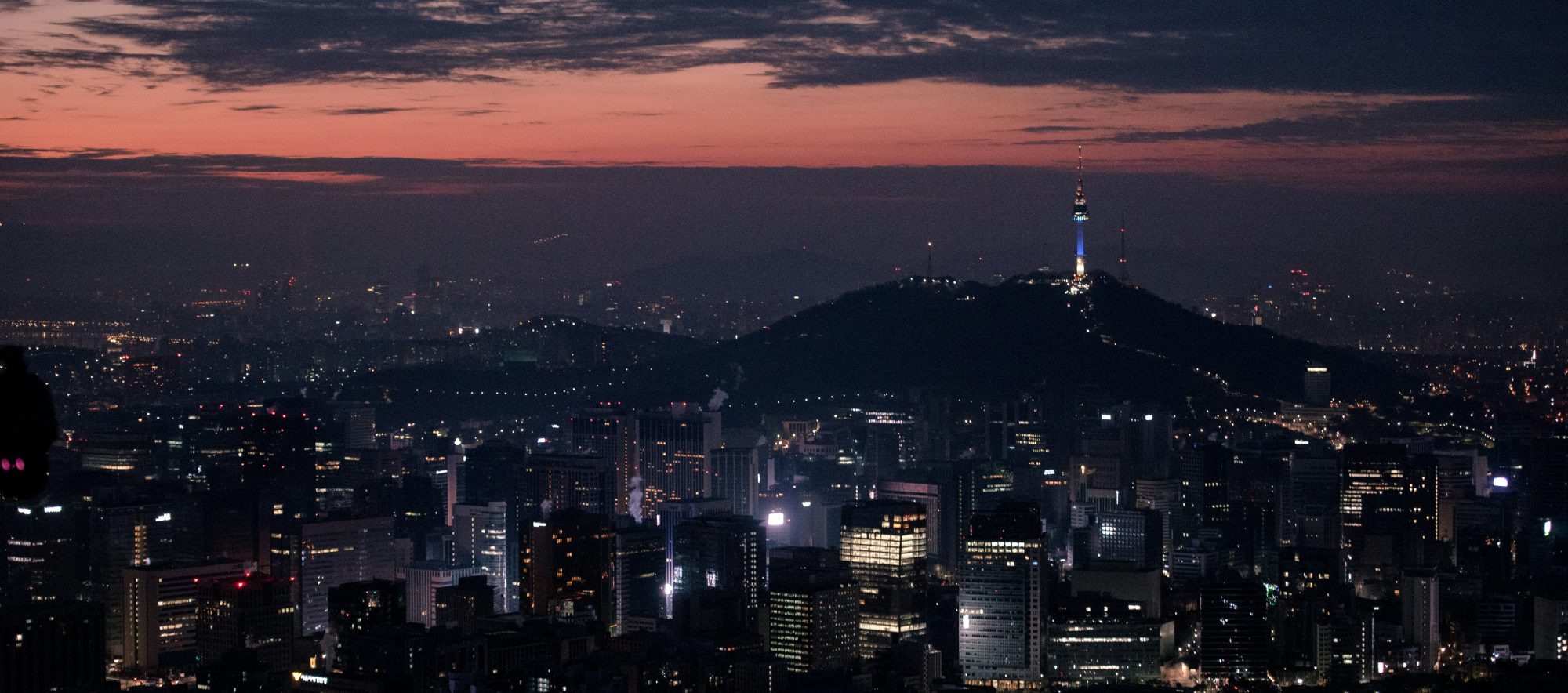
Seoul cityscape 2007 narrow alleyways and skyscrapers urban landscape
Seoul, 2007 — a city where narrow alleyways and towering buildings exist side by side. The Chaser is set in the backstreets of this city. / Photo: Syced / Wikimedia Commons (CC0)

The Theme That Runs Through His Entire World — Evil Is Never Explained

The Chaser drew 5.16 million admissions. Number one at the Korean box office that year. For a debut film, that had never happened before.

But the number is less important than what the film left behind.

Na Hong-jin’s worldview starts here: evil is not explained. The killer Ji Young-min has no backstory, no trauma, no motive the film bothers to give you. He simply is. This choice repeats in The Yellow Sea, and reaches its full expression in The Wailing. Na Hong-jin’s villains are always incomprehensible. That is precisely what makes them terrifying.

The Chaser was also the first proof that Korean genre cinema could travel — that specificity of place, social texture, and moral ambiguity were not barriers to international audiences, but advantages.


What to Know Before You Watch

You don’t need to know the real case to feel the film. But knowing it changes the experience. Na Hong-jin chose this subject for his first feature deliberately. That weight comes through in every frame.

The Chaser is available on Netflix.

If you want to go deeper into the real case behind the film, Netflix’s docuseries The Raincoat Killer: Chasing a Predator in Korea covers the Yoo Young-chul investigation in full. Watch the documentary, then watch the film. The two sit very differently once you’ve seen both.


Na Hong-jin has never made a film that lets you off the hook. If you want to understand what HOPE (2026) is likely to do to its audience, start here.

HOPE (2026) — Why Na Hong-jin Went to Hollywood

Na Hong-jin pushes Korean noir to its absolute limit with The Yellow Sea. If The Chaser convinced you, this one is not optional — watch it before Hope:

The Yellow Sea (황해, 2010): Na Hong-jin’s Most Underrated Film — Explained

The Yellow Sea (2010) illustration of a man wielding a beef bone as a weapon in a dark interior scene
Illustration: The Yellow Sea — a man wielding a beef bone as a weapon in a dark interior / KwaveInsider

If you have questions about Na Hong-jin’s films or Korean cinema, leave them in the comments — I’ll cover them in a future post.

Some links in this post may be affiliate links. If you make a purchase through them, I may earn a small commission at no extra cost to you.

Illustrated poster of Hope (2026), a Na Hong-jin film set in a forest, selected for Cannes Competition

Hope (2026): Na Hong-jin Returns to Cannes Competition with Michael Fassbender, Alicia Vikander & Hoyeon

The Wailing director’s most ambitious project yet — full breakdown of the story, themes, massive cast, and what to expect from the 2026 sci-fi thriller.

K-Drama & Film


Everything that has been revealed about Na Hong-jin’s Hope (2026) — the story, the themes, the cast, the behind-the-scenes obsessions, and what it all means — collected and broken down in one place.


Ten Years of Silence

When The Wailing ended in 2016, nothing was resolved. That was the point. Na Hong-jin took the film to the Cannes Directors’ Fortnight, set a new benchmark for Korean genre cinema, and disappeared.

Ten years later, he’s back. And this time the scale is different — a Hollywood ensemble, the Cannes Competition, a first installment budget of approximately $37 million USD with the entire trilogy projected to exceed $75 million (100 billion KRW), and a vision that spans three films.


The Story — From a Tiger Sighting to the End of the World

The setting is Hopo, a port village near the DMZ in the 1970s and 80s. A place where Cold War tension and information blackouts are the permanent condition. A fisherman reports seeing a tiger. Wild tigers have been extinct in Korea for decades. The report is dismissed. Then people in the village start to disappear.

Anyone who knows Na Hong-jin’s work already understands — the tiger is not a tiger.

The film moves from a deeply local Korean folk mystery to something cosmically vast — a layered escalation designed to dismantle the audience’s psychological defenses. The familiar locality of a closed-off Korean village makes the arrival of something inhuman far more destabilizing. If The Wailing started with a village and ended with unanswerable darkness, Hope starts where that darkness left off.

The title itself is double-layered. Hope is both the name of the film and the name of the village — Hopo (호포항). For the people inside it, the word means something to hold onto. For whatever is arriving from outside, it may mean opportunity.


The Central Theme — When Good Intentions Become Catastrophe

Na Hong-jin has stated this directly.

“I’ve noticed throughout society how someone’s good intentions, filtered through differences in position and perspective, can ultimately lead to catastrophe. I wanted to capture that in this film.”

The village police chief Beomsuk (Hwang Jung-min) acts from a sense of duty — he needs to keep the civilian population calm. The hunter Seonggi (Jo In-sung) tracks the threat from instinct and obligation. The rookie officer Seonge (HoYeon) holds to her principles when everyone around her is abandoning theirs. All three share a good starting point. But the crack that an unknown presence opens between them transforms that goodness into suspicion and violence.

This is the question Na Hong-jin has asked across three films. Hope takes it to a universal scale: what we believe to be our virtue may be another person’s — or another species’ — catastrophe.


Omega — A Trilogy and an Apocalypse

Hope is not a single film. It is the beginning of a saga. Na Hong-jin expanded what was originally one story into a trilogy. The first installment alone carries a reported budget of approximately $37 million USD, with the entire trilogy projected to exceed $75 million (100 billion KRW) — unprecedented in Korean film history.

Images released from the Romanian church location speak to the scale. The director’s initials carved into iron bars. Blood running down windows. Alphabetical gravestones. The Omega symbol (Ω) — the end of Revelation. A creature swallowing a rainbow whole. Something that looks like the sun but has red limbs.

This film is oriented toward what genre theorists call Ontological Horror* — and the visual language already released makes that unmistakable.

* Ontological Horror refers not to fear of a physical threat, but to fear that strikes at the nature of existence itself — who we are, what reality is, whether human life carries any meaning at all. It’s not the monster that terrifies. It’s the realization of how fragile and insignificant human existence looks in the monster’s presence.


The Cast — Two Languages, Two Worlds

One name worth noting before the cast: cinematographer Hong Kyung-pyo, whose work on The Wailing and Bong Joon-ho’s Parasite helped define the visual language of modern Korean cinema, returns as director of photography.

The casting goes beyond star power. It visualizes the film’s central preoccupation with the breakdown of communication.

Hwang Jung-min, Jo In-sung & HoYeon

The village police chief Beomsuk (Hwang Jung-min) works to keep civilian anxiety from boiling over near the DMZ. The hunter Seonggi (Jo In-sung) ranges across mountains and coastline tracking the predator. The rookie officer Seonge (HoYeon) holds to her principles when everyone around her is abandoning theirs. These three form the bedrock of Korean realism at the story’s center.

Hwang Jung-min appeared in The Wailing (2016) as Ilgwang, the shaman — one of the most unsettling performances in that film. He is one of the most trusted actors in Korean cinema. HoYeon is known globally from Squid Game — the fact that Na Hong-jin cast her is already a signal.

Michael Fassbender, Alicia Vikander, Taylor Russell & Cameron Britton

Real-life married couple Fassbender and Vikander play alien presences. Na Hong-jin’s reasoning: “Playing a non-human entity requires a kind of non-verbal trust that only a real relationship can produce.”

There’s a behind-the-scenes detail worth knowing. Scheduling conflicts made it impossible for both actors to be on set simultaneously on certain days. Na Hong-jin solved it with stand-in shooting — one actor performing toward an empty space where the other would later be placed. In the finished scenes, the gap is invisible.

Also joining the alien ensemble: Taylor Russell — known for Bones and All and Waves — and Cameron Britton, whose portrayal of serial killer Ed Kemper in Mindhunter made him one of the most watchable character actors working today. The international cast now spans three continents.

This is a bilingual film — Korean and English in simultaneous use. The language barrier isn’t a logistical detail. It functions as a symbolic boundary: deepening misunderstanding between characters, amplifying fear, making the gulf between human and non-human feel structural rather than incidental. The collision between Hollywood’s register and Chungmuro’s realism generates its own friction — and Na Hong-jin is using that friction deliberately.


Technical Obsession — Ten Months for Half a Day

Na Hong-jin’s perfectionism has always pushed technical limits. On Hope, it crossed into a different category entirely.

A single sequence — Jo In-sung being snatched from horseback, shot on location at Retezat National Park in Romania — required ten months of preparation for half a day of filming.

Five months of horseback riding and action training in Korea. Three months of precise pre-visualization. Two months of on-location adaptation and rehearsal. The shot was captured in natural light at 120fps — high-speed cinematography chosen specifically to render the alien’s movement with what Na Hong-jin describes as “supernatural fluidity.” The result is something a standard frame rate cannot produce.


Cannes + Neon

Hope enters the Cannes Film Festival Competition in 2026 — Na Hong-jin’s second time at Cannes. US distribution has been confirmed by Neon, the company that brought Bong Joon-ho’s Parasite to American audiences. That’s not a coincidence. It’s a statement of intent.


Summer 2026

The fear that our own goodness can become someone else’s catastrophe. Na Hong-jin has carried that question across three films. Hope delivers it at the scale of human extinction.

The highest point Korean cinema has ever reached, or the deepest abyss. Either way — this summer matters.


Before You Watch — Na Hong-jin’s Three Films

Three films. That’s the entire filmography. All three changed Korean genre cinema. Watch them before Hope arrives.

The Chaser (추격자, 2008) — Netflix His debut. Based on a real serial killer case. The film that reset the standard for Korean thrillers overnight. Starring Kim Yun-seok and Ha Jung-woo. Watch on Netflix →

The Yellow Sea (황해, 2010) — Netflix A Yanbian Korean-Chinese taxi driver accepts a contract killing and crosses into Korea. Two and a half hours without room to breathe. Watch on Netflix →

The Wailing (곡성, 2016) One of the most analyzed films in Korean cinema history. Cannes Directors’ Fortnight. The ending is still being argued about. Start here if you’ve seen nothing else. Although it recently left Netflix, you can still stream it on Disney+ in many regions. It’s also available to rent or purchase on Apple TV and Amazon Prime Video.

Video: The Wailing (곡성) Official Trailer / Source: Well Go USA Entertainment (YouTube)

The first clip for Hope just dropped on the official Cannes website. For the latest on what the footage reveals — and what Seoul is expecting: Na Hong-jin’s Hope — First Clip, Full Breakdown, and What Seoul Is Expecting →

Illustrated collage thumbnail for Na Hong-jin’s Hope featuring four cinematic scenes before Cannes premiere
Illustration: Na Hong-jin’s Hope / KwaveInsider


Some links in this post may be affiliate links. If you make a purchase through them, I may earn a small commission at no extra cost to you.