
Chaebol, Princes, and Power — The Real History Behind Episodes 1 & 2
K-Drama & Film
Did you enjoy Episodes 1 and 2 of Perfect Crown? That final scene in Episode 2 — you felt it, right? The lavish visuals, the royal fantasy — this kind of drama never gets old.
But while international viewers were enjoying the spectacle, Korean viewers were reading something extra into the same scenes. Historical and cultural codes embedded in the drama — things most audiences outside Korea won’t catch.
This isn’t a spoiler post. It’s a decoder.
Why Koreans feel complicated watching royal fantasies has been covered in a separate post. This one focuses on three specific elements already introduced in Episodes 1 and 2 — and what they mean.
1. The Queen Mother’s Family — Why That Detail Matters
In Perfect Crown, the queen mother comes from a family that has produced four queens. That detail gets repeated. Korean viewers catch it immediately — because they’ve seen this story before.
In 15th-century Joseon Korea, there was a man named Han Myeonghoe. He wasn’t the king. He was an official. But he married four of his daughters into the royal family. Four queens. One father. He effectively ran the country from the outside.
Here’s the simplest way to understand it. The king was the face. The real power belonged to the king’s father-in-law. In Korean, this is called waecheok (외척) — the queen’s family seizing control. It was the thing the Joseon Dynasty feared most.
They tried to prevent it. They failed. History repeated itself.
In the late 18th century, one of Joseon’s most brilliant kings — King Jeongjo — died young, leaving behind a child son. On his deathbed, he entrusted the boy to his most trusted official. That official became the boy-king’s father-in-law. The result? For the next sixty years, that family ran Korea. The king existed. But he was a figurehead. Many historians trace the eventual collapse of the Joseon Dynasty directly back to this moment.
When Korean viewers see the queen mother’s family described as having produced four queens in Perfect Crown — they tense up. Because they know exactly how this pattern ends.
2. The Grand Prince — The Most Dangerous Position in the Palace
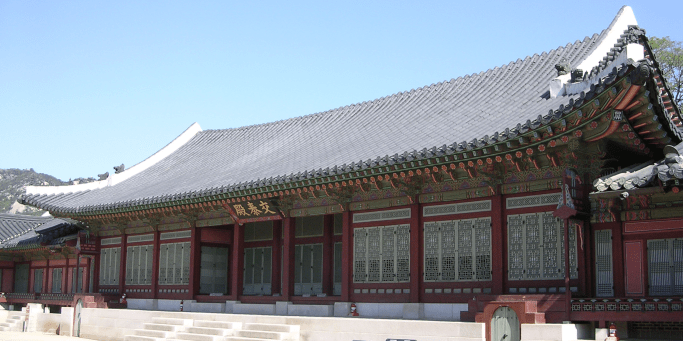
In the drama, Grand Prince Yi-an is shown helping to govern and support the king. International viewers might read this as simply “a good prince helping out.” Korean viewers read something more complicated.
First, what is a grand prince? In Joseon, a daegun (대군) was a son born to the king by his official queen — a legitimate royal prince. Sounds prestigious. The reality was darker.
A capable grand prince was dangerous. He was a potential rival to the crown prince. Historically, capable grand princes were exiled or killed. In the drama, a news article describes Grand Prince Yi-an as “a modern-day Prince Suyang.” Korean viewers know exactly what that means.
Prince Suyang was a grand prince in the 15th century. He was capable, ambitious — and ultimately, he killed his young nephew, the king, and took the throne himself. He eliminated dozens of rivals along the way.
And here’s the other thing: in actual Joseon history, a king’s regent was always his mother — never his brother or uncle. A grand prince acting as regent simply did not happen. So while Yi-an appears to be helpfully governing in the drama, in historical reality he would be in a precarious position — his life potentially threatened by the very queen mother whose family holds the real power.
Will Yi-an protect his nephew to the end? Or will he become Prince Suyang? That’s the real question this drama is asking.
3. Chaebol — The Republic’s Modern Aristocracy
Samsung. Hyundai. LG. These names are familiar worldwide — smartphones, cars, televisions. But when Koreans look at these companies, they don’t just see products. They see chaebol.
The easiest way to understand chaebol: imagine Steve Jobs had handed Apple not to a qualified successor, but to his children — regardless of their ability. In the United States, that would trigger congressional hearings and wall-to-wall media coverage. In Korea, this has been happening for decades. Companies are inherited by blood, not by merit.
How did this happen? The origins of chaebol go back to the Korean War in the 1950s. The war left Korea in ruins. But there were entrepreneurs with ambition. They created something from nothing and achieved remarkable things. Much of Korea’s economic success today is owed to them. However, their growth also took place in partnership with authoritarian governments of the time.
South Korea’s constitution states that all citizens are equal. There is no aristocracy. But economic inequality clearly exists. And in practice, the chaebol families — passing wealth down through generations — look very much like a modern aristocracy.
The fact that Seong Hee-ju in Perfect Crown comes from a chaebol family but lacks royal status is not accidental. The drama places these two worlds side by side and asks the sharpest question in modern Korean society: what’s the real difference?
Films That Bring This History to Life
The Man Who Lived with the King (왕과 사는 남자, 2026) — Currently in Korean theaters
Han Myeonghoe — the man who placed four daughters on the throne — is a central character. The perfect companion piece to Perfect Crown. A major hit in Korea right now. Watch for the OTT release.
The Face Reader (관상, 2013) — Netflix
Prince Suyang — the historical figure referenced in the drama — is the central antagonist. Lee Jung-jae, known internationally from Squid Game, plays Suyang. Song Kang-ho, known from Parasite, plays the face reader at the center of the story. This film shows exactly how a capable prince seized the throne — and what it cost everyone around him. Essential viewing. You won’t regret it.
This series continues. I’ll be back after Episodes 3 and 4.
Does your country have a modern aristocracy? Leave a comment — I’d genuinely like to know.
Some links in this post may be affiliate links. If you make a purchase through them, I may earn a small commission at no extra cost to you.
 K-wave Insider