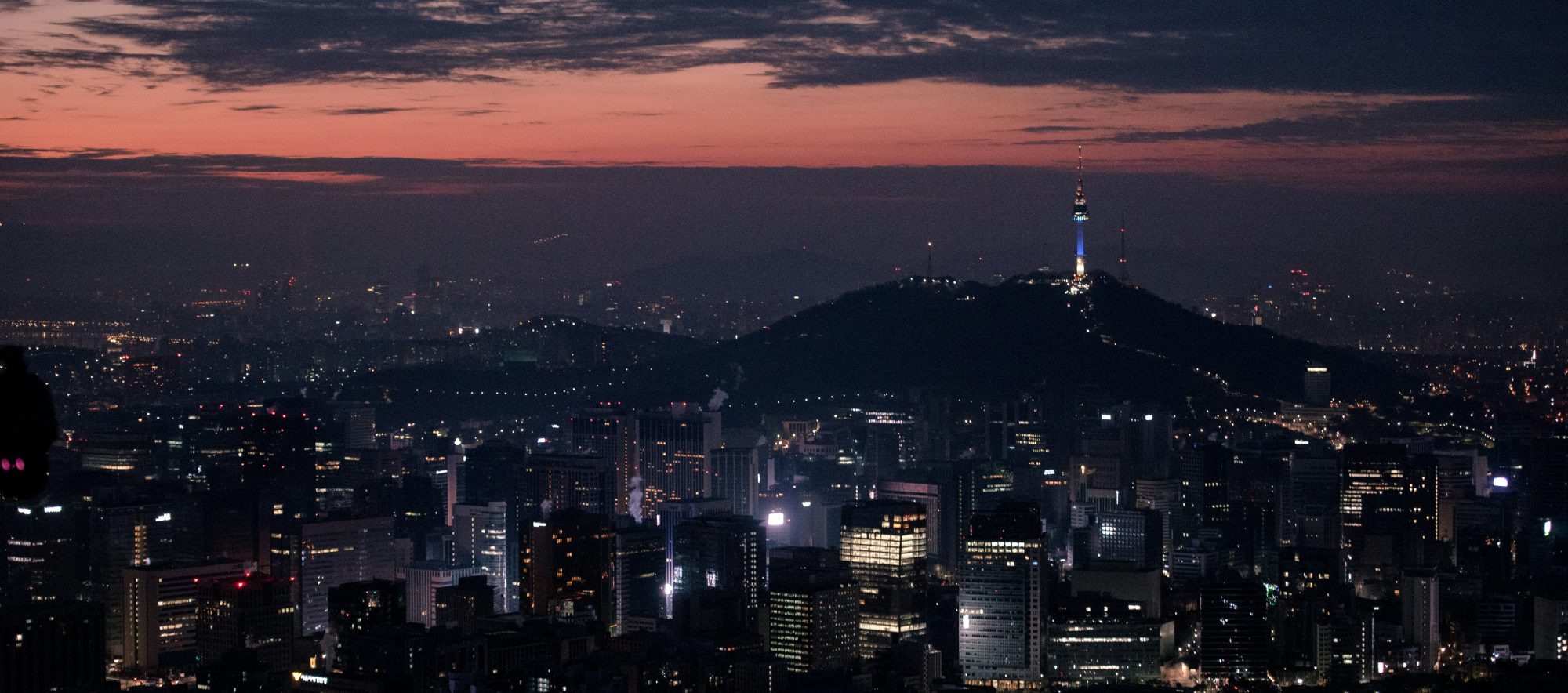
Netflix Korea is full of blood, ghosts, and dark fantasy right now. This one is the palate cleanser. No spoilers.
Is Spooky in Love out? Yes — it premiered July 18, 2026, simultaneously on tvN and Netflix. 12 episodes, airing Saturdays and Sundays through August 23. Where can I watch it? It’s streaming on Netflix. What’s it about? A ghost-seeing chaebol heiress and a prosecutor who’s terrified of ghosts team up to solve unsolved murder cases — with romance building along the way.
Look at Netflix Korea right now and one thing is obvious: summer is ghost story season. The East Palace is dark fantasy. Agent Kim Reactivated is soaked in action and blood. Against that backdrop, Spooky in Love feels like the palate cleanser — a romantic comedy with ghosts, crime cases, and just enough horror to keep it from becoming too sweet.
A Romance That’s Also a Procedural — and Somehow Never Boring
Park Eun-bin is, honestly, one of those actors you can trust blind. Smart, magnetic, and internationally known now for playing an autistic lawyer in Extraordinary Attorney Woo. She has never felt like an actress chasing prettiness for its own sake.
Here she plays a chaebol heiress and CEO of the Reina Hotel who can see ghosts. She’s been able to see them since a childhood yacht accident, and there’s a catch: anyone who touches her can suddenly see them too — which is exactly why she’s kept people at arm’s length her whole life.
Her counterpart is Yang Se-jong, playing a prosecutor who’s more afraid of ghosts than anyone. He crosses paths with Yeo-ri at a crime scene, and suddenly he’s confronting things no amount of common sense can explain.
The structure is what makes this combination work. Each episode has a case that resolves quickly, running alongside one larger mystery that keeps building underneath. That’s why it never drags. Park Eun-bin’s performance is exactly what you’d expect — strong. Yang Se-jong is a notch behind her, but solid. The comedy never feels forced either, which makes the whole thing easy to sit through.
A Third Character the Original Never Had
Ong Seong-wu plays Kang Min-hwan, a character who doesn’t exist anywhere in the original film. He’s the heir to the CL Group and CEO of CL Raymond Hotel — Reina Hotel’s rival. He’s Yeo-ri’s close friend on the surface, but there’s ambition hiding behind that smile. It’s reportedly Ong Seong-wu’s first villain-adjacent role.
Where Yeo-ri ends up between these two men is the show’s other major thread.
A Remake That Leans Into Spectacle
This series is a remake of the 2011 film Spellbound (오싹한 연애). Park Eun-bin herself put it well at the press conference: the film had two hours, the drama has twelve episodes — meaning at least six times more new material had to be built in.
The original film had a darker tone. This one takes a completely different approach. Fitting a chaebol heiress and hotel CEO, the screen is filled with luxury brands and glossy architecture. The production value shows in the location work too — plenty of gorgeous settings throughout.
The case-of-the-week structure keeps things moving without ever feeling stuck. If you want something funny and romantic that doesn’t ask much of your brain, this is exactly that.
One complaint, though: the chaebol setup feels overly familiar. Korean dramas lean on rich heirs and corporate succession conflicts so often that even when it works, it can feel like familiar machinery turning again.
The Verdict — Easy, Glossy, and Exactly What Summer Needs
If you want something that doesn’t leave your stomach in knots, doesn’t demand heavy theory, and still gives you ghosts, romance, comedy, and cases to follow, Spooky in Love works. It’s not trying to be the next Kingdom or The East Palace. It’s lighter by design — and that’s exactly why it lands.
Basic Info
English Title: Spooky in Love
Korean Title: 오싹한 연애
Based on: the 2011 film Spellbound (오싹한 연애)
Streaming: tvN and Netflix simultaneous release, July 18, 2026
Episodes: 12 (Saturdays & Sundays, through August 23)
Director: Lee Min-soo
Writer: Choi Jung-mi
Cast: Park Eun-bin (Cheon Yeo-ri), Yang Se-jong (Ma Gang-uk), Ong Seong-wu (Kang Min-hwan)
Already watching? Here’s every episode recapped — full spoilers ahead.
No original source material, no easy answers. What Gu-cheon’s powers, his weapon, and that final chain actually mean.
⚠️ Contains spoilers.
Finish The East Palace and one question still lingers. What exactly was Gu-cheon?
This show is an original — no source material to draw from. Understanding Gu-cheon means piecing together clues scattered across the story. Put them together, and an interesting picture emerges.
Gu-cheon — A Name With More Than One Reading
The name “Gu-cheon” can be read a few different ways. One is gucheon (九泉), a Hanja word for the underworld. In Korean, the phrase “wandering gucheon” is a common expression for a spirit that can’t reach the afterlife — trapped between worlds, wandering forever.
There’s also gucheon (救天), “one who saves heaven.” It’s a real name some Koreans actually carry.
So this character’s name means “the one who saves heaven,” while sounding exactly like “the one who wanders the underworld.” His fate — caught on the boundary between the living and the dead — is compressed into a single name. In Joseon Neo-Confucian thought, a king’s authority to rule was believed to come from the Mandate of Heaven (天命).
Put together, the name quietly captures exactly who this character is: a man who protects a king ruling by heaven’s mandate, while fighting ghosts inside a palace that borders the world of the dead.
Gu-cheon Is Not a Mudang
In Korea, a mudang (shaman) serves a deity and channels that deity’s power to perform supernatural work. Shamans were also socially marginalized in Joseon, often treated as low-status figures outside respectable Confucian society.
Gu-cheon is different. He serves no deity — he exorcises ghosts purely through his own ability.
There’s a clue in his clothing, too. The shape of a Joseon-era gat (traditional horsehair hat) signaled social rank: narrow-brimmed styles were worn by the jungin (middle class), wide-brimmed ones by the yangban aristocracy. The gat Gu-cheon wears in the show’s later episodes has the wide brim of the yangban style. That detail is backed up by the finale, where he wears it while speaking to a royal princess as something close to an equal — something someone of low birth simply couldn’t have done.
So Gu-cheon is not a marginalized shaman. He is closer to an independent exorcist who holds, at minimum, yangban status.
An Ability Born in Water
As a child, Gu-cheon and his mother fall into water together in an accident. On the surface, it plays out as his mother dying while he alone survives.
But that’s not quite what happened. In that moment, Gu-cheon also died — briefly. His breath stopped underwater, and he came back. In that exact instant, he experienced the world of ghosts for the first time.
From then on, he can enter that world whenever he stands at the threshold of death. His final act — slitting his own throat to reach the brink of death and enter the world of ghosts to save Saeng-gang — isn’t a new power. It’s the same thing he’s been doing since childhood.
The “World of Ghosts” Is Invented — But Not From Nothing
As covered in an earlier post, the term “world of ghosts” (귀의 세계) doesn’t exist in Korean mythology under that exact name. This is the show’s own invention.
The premise — a space that overlaps with the world of the living but can’t be seen from it — actually resembles Silent Hill‘s Otherworld more than any Korean myth. It follows the grammar of Western occult fiction: cross into another world to see what’s hidden.
Korea’s traditional view of the afterlife works differently. In Korean belief, the dead cross a river called Hwangcheon (黃泉) to reach the underworld. If anything, Hwangcheon works more like a one-way passage into the realm of the dead, not a hidden layer sitting on top of the living world.
So the “world of ghosts” Gu-cheon moves through isn’t Korean myth, and it isn’t Western Otherworld lore either. It’s something the show built by blending the two.
A Man Who Confronts Spirits — Cheoyong’s Precedent
A character who can confront or communicate with supernatural beings is not entirely without precedent in Korean storytelling. The most famous example is the legend of Cheoyong (處容), recorded in the Samguk Yusa — a 13th-century compilation of Korean myths, legends, and historical records, one of the oldest surviving sources on ancient Korean folklore.
The original story is different from what modern audiences might assume. Cheoyong found the plague god (疫神) in bed with his wife — and instead of confronting it with violence, he forgave it, moving it with a song and a dance. The plague god, moved, withdrew and vowed never to enter any household displaying Cheoyong’s image. Afterward, people believed his face could ward off ghosts and disease alike, and painted it on their doors as a protective talisman — a practice that persisted for generations.
Here’s what’s interesting: the 2014 drama Cheoyong, the Detective Who Sees Ghosts reinterpreted this legend completely. The series aired on OCN, a Korean cable network known for genre thrillers, and recast Cheoyong as a man who could commune with the dead. The image of “Cheoyong who sees ghosts” isn’t from the original text — it’s a modern reinterpretation. Gu-cheon stands on that same modern lineage: the special human who can cross the boundary between ordinary people and supernatural beings, an archetype Korean media keeps reinventing.
What He Knows, and Where He Might Have Learned It
Gu-cheon clearly has deep knowledge of ghosts by the time we meet him. A Buddhist monk is the one who recommends him when the king goes looking for someone who can drive out spirits — a sign that Gu-cheon already had real standing in this field before the story begins.
From here on, this is speculation, though it’s a plausible one. In Joseon, monks with strong spiritual discipline were believed capable of exorcising ghosts. Left with nowhere to go after losing his mother in the accident, Gu-cheon may well have grown up at a temple, learning exorcism there, and eventually turned his ability to enter the world of ghosts into the work of a professional exorcist.
The Weapon — Why It Has to Be Wood, Not Steel
Gu-cheon’s weapon is worth a closer look too. An ordinary sword doesn’t work on ghosts. Instead, a branch from a tree known to ward off spirits transforms into a blade the moment he takes it in hand.
This isn’t invented from nothing. As covered in an earlier post, the peach tree and lightning-struck jujube wood (byeokjomok) are Korea’s two classic ghost-warding trees. The peach tree’s use as a protective charm dates back to the Samguk Yusa. Byeokjomok was believed to carry the strongest possible yang energy, which is why it was also prized as material for ingamdojang (印鑑圖章) — a personal registered stamp used in Korea in place of a signature for official transactions like banking or real estate contracts.
Making these trees, rather than conventional weapons, the tools of ghost-hunting is a detail that shows real understanding of Korean occult tradition.
The Final Chain — What It Actually Means
In the finale, the chain left on Gu-cheon’s wrist is the mark of a bargain struck with the “Primordial Gwimae.” It’s the power he gained in exchange for destroying the Crown Prince’s spirit — and that price was never fully paid off.
The show never fully explains what the chain means. But one thing is certain: Gu-cheon isn’t entirely free. He walks out of the palace with his bond to the Primordial Gwimae unresolved.
If a second season happens, that chain is the most obvious place to start — the reason he’d have to return to the palace, or to the world of ghosts, all over again.
The Verdict
Gu-cheon was built without any source material, but every piece of him comes from Korean culture. A double fate compressed into a single name. Clothing details that reveal rank. A second world that opens at the threshold of death. An old archetype of the human who confronts spirits. A weapon carved from wood. And a bargain that never fully closes.
That’s what The East Palace does through this character — takes the skeleton of Western occult fiction and builds it entirely out of Korean material.
Basic Info
Video: The East Palace | Official Teaser | Netflix / Source: Netflix (YouTube)
Title: The East Palace (동궁, Donggung)
Streaming: Netflix (worldwide, July 17, 2026)
Episodes: 8
Director: Choi Jung-gyu
Writers: Kwon So-ra, Seo Jae-won
Cast: Nam Joo-hyuk (Gu-cheon), Roh Yoon-seo (Saeng-gang), Cho Seung-woo (The King), Jang Young-nam (Queen Dowager), Kwak Dong-yeon (Crown Prince), Tae In-ho (Prince Iksang), Hwang Young-hee (Consort Choi)
If you want the no-spoiler side of the story first, start here:
Small, black, adorable, and officially nicknamed “companion gwimae.” Here’s the real folklore behind Netflix’s newest breakout character.
⚠️ Contains spoilers.
Watch The East Palace and one presence might stick with you more than either lead. Not Cho Seung-woo. Not Nam Joo-hyuk. Kkeomeoksari.
Small, jet-black, and doll-like, this creature has already earned an official nickname in Korean press coverage: “companion gwimae” (반려 귀매). Not a fan nickname — it’s showing up in headlines. That’s not an accident.
A Bond That Started With a Rice Cake
The relationship between Gu-cheon and Kkeomeoksari doesn’t happen all at once. Small kindnesses accumulate, and that accumulation grows into something that eventually saves both their lives.
It starts with a rice cake. Gu-cheon shares one with Kkeomeoksari, forming the first thread of a bond. In the same breath, he warns Saeng-gang to keep her distance — he already knows this is a creature that preys on human yang energy.
The relationship builds gradually from there. Kkeomeoksari starts helping Gu-cheon in small ways. Then, when it’s nearly devoured by a snake ghost born from the palace’s dark energy, Gu-cheon steps in and saves it — extending a finger and offering, “I’ll give you a bit of my yang energy.” Kkeomeoksari absorbs what he freely offers.
Later, the moment reverses. When Gu-cheon is on the brink of death at the hands of tasal gamheung harabeom, Kkeomeoksari is the one who saves him.
A relationship that began with a single rice cake grows into one where both have saved the other’s life.
There’s real irony built into this. Kkeomeoksari is introduced as something dangerous — a creature that feeds on human yang energy, best kept at arm’s length. Black body, a round stone-like face, huge eyes: a design that reads as adorable and unsettling at once. But it’s Gu-cheon’s choice to let it close despite knowing the risk that turns this creature from threat into ally.
A Nameless Presence With No Fixed Identity
Kkeomeoksari isn’t pure invention. The writers have said directly that this character comes from an obscure, orally transmitted urban legend — a dark, child-like figure that jumps out from the mountainside and repeats “I am Kkeomeoksari, Kkeomeoksari, Kkeomeoksari” while chasing whoever it encounters.
The name’s origin is interesting too. “Kkeomeok” means pitch-black darkness; “sari” is a suffix meaning a living being. Put together, it roughly translates to “a being that lives as darkness.”
It’s such a minor story that most Koreans had never heard of it either. Choosing this obscure figure over famous ones like the gumiho or dokkaebi was a smart move — without a fixed public image to work against, the writers had total freedom to build the character from scratch.
The Design Choice the Director Explained Himself
Director Choi Jung-gyu has said he kept the original creature’s core traits while designing it in a “simple and universal” form. Behind-the-scenes reporting notes the production specifically searched for a “dog-like gwimae.”
Both of those choices point in the same direction: a character built from the start to be memorable, merchandisable, and meme-friendly.
Think of it as something in the spirit of KPop Demon Hunters‘ Saja Boys — a character that can become its own IP independent of the main story. It’s a strategy Korean content has been leaning into more and more: plant a cute, merchandise-ready mascot inside an otherwise dark, serious occult drama.
Cute and Unsettling at the Same Time
One outlet described Kkeomeoksari as alternating between “an eerie apparition” and “the familiarity of a mascot.” That’s an accurate read.
Kkeomeoksari isn’t the ghost of someone who died. Within the show’s own rules, it’s a gwimae (鬼魅) — a distinct kind of entity born when bad energy accumulates in one place. That’s a more alien identity than a typical vengeful spirit. The cleverness of this character is wrapping that alien quality in something adorable.
Even the Smallest Creature Repays a Debt — An Old Korean Folktale Pattern
In the finale, Kkeomeoksari grows enormous and swallows whole the massive force that’s been threatening Gu-cheon. The scene doesn’t feel unfamiliar.
This pattern repeats across Korean folklore. The most famous example is “The Magpies’ Gratitude” (까치의 보은). A scholar saves a baby magpie from a snake about to devour it, and later, when he’s in mortal danger, the magpie repays that debt with its life. Even a creature with no intelligence to speak of repays a debt owed to a human, at the decisive moment, with its life.
The East Palace takes this familiar cliché and drapes it over a nameless creature from an obscure urban legend. In place of the famous magpie, an unknown figure nobody had heard of takes its role instead.
Basic Info
Video: 동궁 | ⚠️ 서울 도심에 꺼먹살이 출현 (Kkeomeoksari Spotted in Downtown Seoul) ⚠️ | Netflix / Source: Netflix Korea (YouTube) (Korean-language only for now — no English dub or captions yet, but you don’t need them to see how cute Kkeomeoksari looks.)
Title: The East Palace (동궁, Donggung)
Streaming: Netflix (worldwide, July 17, 2026)
Episodes: 8
Director: Choi Jung-gyu
Writers: Kwon So-ra, Seo Jae-won
Cast: Nam Joo-hyuk (Gu-cheon), Roh Yoon-seo (Saeng-gang), Cho Seung-woo (The King), Jang Young-nam (Queen Dowager), Kwak Dong-yeon (Crown Prince), Tae In-ho (Prince Iksang), Hwang Young-hee (Consort Choi)
The pond ghost was never the killer. Here’s the full story, every major twist, the villain reveal, and why the finale almost lost me. Full spoilers.
⚠️ Full spoilers ahead. This covers the entire ending of The East Palace.
Gu-cheon is The East Palace‘s protagonist. But really, he’s just the fixer who wanders into a much bigger mess of greed and grievance — one that’s been building for thirty years. Think about it long enough, and the real protagonist of this show isn’t Gu-cheon at all. It’s the power struggle inside the royal family.
Short Answer: It Was Never Just the Pond Ghost
The real tragedy in The East Palace wasn’t caused by the pond ghost alone. The ghost was bait — a tragic story used to hide something far more human: royal greed, succession politics, and a thirty-year chain of revenge.
That’s why the ending works better once you stop asking “which ghost did it” and start asking who benefited from the curse.
The Writers Win This One
An earlier post already praised this show’s writing, and it’s worth repeating. Episodes 1 through 4 play like a straightforward exorcism drama built around a “pond ghost.” Then episodes 5, 6, and 7 each land a twist that reshapes everything that came before. Netflix dramas have a well-known problem with sagging back halves — this one’s writers solved it with genuine craft. By the back stretch, the show plays more like a mystery-thriller than a horror show.
The Bait Called “The Pond Ghost”
The current king (Cho Seung-woo) isn’t the Queen Dowager’s biological son. Thirty years ago, her legitimate sons — the rightful heirs — died one by one, supposedly cursed by the pond ghost. With no heir left, a son born to a royal concubine climbed onto the throne instead: the man who is king now.
Thirty years later, history seems to repeat. Of the current king’s three sons, the eldest and second-eldest die of unexplained causes, and the youngest, Prince Yeongan, is next in danger. The king summons Gu-cheon, a man who can slay ghosts, and threatens to kill him if he can’t save the prince. He assigns his own daughter, Princess Saeng-gang — who can hear the voices of the dead — to assist him.
Gu-cheon uncovers what really happened thirty years ago. A former court lady known as seung-eun sanggung (승은상궁) — a woman chosen by the king to spend a night with him, a status that could eventually lead to becoming a royal consort — earned the previous king’s favor and became pregnant. The Queen Dowager, consumed by jealousy, framed her for an affair with a byeolgam (별감, a low-ranking male palace attendant), tortured her, and forced a miscarriage. The concubine cursed the Dowager in front of thirteen witnessing court ladies and drowned herself in the palace pond — becoming the pond ghost.
Afterward, the Dowager’s own sons started dying one by one. A cursed phrase — “a snake’s shed skin killed the dragon’s child” — appeared inside the salt storehouse where the thirteen court ladies who’d witnessed the concubine’s death were being held for interrogation. Before the Dowager could learn who wrote it, a fire broke out and killed all thirteen women.
Episodes 1 through 4 wrap with Gu-cheon uncovering this and sending both the pond ghost and the thirteen ladies’ spirits into the afterlife. Case closed — or so it seems. The truth runs much deeper.
Who’s the Real Killer?
Gu-cheon eliminates the pond ghost, but something feels off. A spirit responsible for that many deaths shouldn’t have passed on so easily. Sure enough, the truth surfaces. Prince Yeongan dies anyway.
That’s when Gu-cheon learns the current Crown Prince was actually killed by his own father, the king — and concludes the Crown Prince’s vengeful spirit must be behind everything now. The audience, like Gu-cheon, starts to suspect the king is the true villain.
The Crown Prince’s ghost moves to kill the king, and Gu-cheon confronts him again in the world of ghosts. But he’s blocked by tasal gamheung harabeom (타살감흥할아범) — the guardian spirit (momjusin) of a shaman hired by Prince Iksang, the king’s own brother. Gu-cheon takes a curse from the shaman and loses much of his eyesight. What exactly this entity is deserves its own post — coming next. But at this stage, the show has moved far beyond the pond ghost. That story was only the first layer.
The Real Monster Is Human
Episode 6 delivers the deeper reveal. The real killer of the previous king’s sons, thirty years ago, was Consort Choi (숙빈 최씨) — the current king’s own birth mother. She’d staged her own persecution as a curse, eliminated the Dowager’s sons one by one, and put her own son on the throne.
She’d also had help. Saeng-gang’s mother — then a lowly court servant — assisted Consort Choi in poisoning the princes. The king later married her to protect her from Consort Choi, once she was no longer just a servant. The woman who’d appeared throughout the show as Saeng-gang’s gentle grandmother turns out to be the story’s true architect of evil. And that bloodline follows Saeng-gang too — she isn’t responsible for what they did, but she can’t fully escape the legacy either.
In the same episode, the king orders the mass execution of an entire district’s population to contain a plague outbreak. That decision comes back to haunt him later.
By this point, The East Palace has made its real argument clear. The horror here isn’t just supernatural. The horror is power.
History Repeats — The Son Follows the Father’s Path
Episode 7 has one more twist waiting. The one killing the current princes isn’t an outside spirit at all — it’s the Crown Prince himself, who appeared to have been wrongfully killed by his own father.
The Crown Prince, who shares Saeng-gang’s ability to hear the dead, learned from the spirits trapped in the salt storehouse that his father had killed his own brothers to take the throne. He repeated the exact same pattern — killing his own brothers and disguising it as the pond ghost’s work.
The king had known all along there was no pond ghost. The moment he confirms his son is the real killer, he poisons him without hesitation. His logic is brutal: it was enough that he killed his own brothers to become king; he won’t allow his son to repeat the same path. It reads less like a father punishing a son than a ruler confessing to — and justifying — his own ugly past.
That’s the tragedy of The East Palace. The curse didn’t repeat itself because a ghost came back. It repeated because the royal family never changed.
The Ending — The Primordial Gwimae
The Crown Prince’s threat keeps growing. As the spirits of plague victims gather in the palace, the king holds a grand ritual to appease them. Instead, the Crown Prince absorbs those very souls, transforming from a wongwi (a vengeful ghost) into something far worse — a full gwimae (also written gwi mae).
Believing Gu-cheon will die fighting this monster, Saeng-gang throws herself into the battle instead and ends up in mortal danger. Gu-cheon slits his own throat to reach the brink of death and enter the world of ghosts to save her. There, he strikes a bargain with the “Primordial Gwimae” (태초의 귀매) and receives a chain-linked sword capable of destroying the Crown Prince’s monstrous form. With it, he finally erases the Crown Prince’s spirit for good.
That’s the ending in plot terms. But emotionally, this is also where the show gets most uneven.
The Primordial Gwimae Almost Lost Me
Honestly, the “Primordial Gwimae” is too easy a solution. This is where the finale disappoints most. The whole concept reads like a stock franchise-fantasy device rather than the tightly grounded ghost logic the show had built until then. In Korean, calling something “primordial” (태초) implies it’s foundational, ancient, cosmically significant. For a show that had been so good at tying its ghosts to grief, resentment, politics, and human cruelty, slapping that word on this particular monster doesn’t carry the weight the term demands.
That doesn’t ruin the show. But it weakens the finale.
The Details That Still Worked
Not everything in the finale falls short. A couple of details are genuinely well-crafted.
Gu-cheon dies and returns exactly three days later. In Korea, the number three carries real weight. One old belief connected to the three-day funeral is that the deceased might still return within that window. Tying Gu-cheon’s resurrection to that exact number is a small but deliberate touch.
Here’s another: when Saeng-gang leaves the palace, she rides a horse. When she returns, she walks. Joseon palace gates had a hamabi (下馬碑) — a stone marker instructing everyone, regardless of rank, to dismount and walk from that point on. Riding a horse straight through the gate was a privilege reserved for something like a royal procession. That detail wasn’t an accident — it’s the kind of thing The East Palace does well, small historical signals hidden inside genre storytelling.
Does Gu-cheon Die in The East Palace?
No. Gu-cheon survives. He slits his own throat to cross into the world of ghosts and make his bargain, but the king honors his promise and lets him go free. He walks out of the palace alive — though not entirely free of what he traded away.
The Chain Never Breaks
The king keeps his word and lets Gu-cheon go free, to live outside the palace.
Gu-cheon walks out with Saeng-gang, and his face looks genuinely happy. For a moment, it feels like freedom. But then the show reveals the chain — bound by the Primordial Gwimae, still hanging from Gu-cheon’s wrist, coiled around the palace itself. He isn’t free of that bargain.
Maybe that chain is the concentrated form of everything this show has been about: human greed for power, and the han that greed leaves behind. The pond ghost is gone. The Crown Prince is gone. The chain remains.
If Netflix gives The East Palace a second season, that chain is the obvious place to begin.
Basic Info
Video: The East Palace | Official Teaser | Netflix / Source: Netflix (YouTube)
Title: The East Palace (동궁, Donggung)
Streaming: Netflix (worldwide, July 17, 2026)
Episodes: 8
Director: Choi Jung-gyu
Writers: Kwon So-ra, Seo Jae-won
Cast: Nam Joo-hyuk (Gu-cheon), Roh Yoon-seo (Saeng-gang), Cho Seung-woo (The King), Jang Young-nam (Queen Dowager), Kwak Dong-yeon (Crown Prince), Tae In-ho (Prince Iksang), Hwang Young-hee (Consort Choi)
If you want the no-spoiler side of the story first, start here:
Korean ghosts are surprisingly reasonable. They negotiate. Here’s the folklore, the shamanism, and the untranslatable grief that make this show make sense. No spoilers.
An earlier post covered Joseon politics and royal power. This time: the real material that makes The East Palace an occult show — Korea’s ghost lore and shamanic tradition. Personally, I don’t believe in ghosts, but I love ghost stories. Ghosts reveal something about human nature, and about the society that produced them.
⚠️ No spoilers.
Korean Ghosts Are Surprisingly Reasonable
There’s no shortage of Korean ghost stories. But they often feel different from the ghosts of Japanese horror films like Ju-on or Ring, where the curse can spread almost indiscriminately. Korean ghosts don’t work that way.
The classic Korean ghost cliché goes like this: a woman who died a wrongful death appears at night in a white burial gown, sobbing. People are terrified; some are frightened badly enough to die from the shock. Then someone brave enough — traditionally a newly appointed local magistrate — hears her out, listens to her grievance, and resolves it. Once her han (한, a wrong that was never righted) is settled, the ghost thanks him and departs quietly for the afterlife.
In other words, Korean ghosts can be reasoned with. There’s a logic to them.
The usual simplified explanation goes like this: Japanese ghosts often run on won (怨, a grudge), while Korean ghosts often run on han (恨). A grudge can really only be sealed away. Han can be resolved.
“Han” — The Emotion That Doesn’t Translate
Han is grief, injustice, and resentment that accumulates over a long time and hardens into something permanent. It doesn’t erupt the way anger does. It’s closer to something absorbed, suppressed, and compressed until it calcifies.
A defining feature: han is usually rooted in something structural — patriarchy, the rigid class system, war, gendered violence — problems too large for any one person to resolve alone.
Loosely translated into English, it’s something like “grief mixed with resentment, accumulated over time.” But there’s no word that maps onto it exactly. The East Palace, like countless Korean occult stories before it, is built on this emotion. Why the ghosts exist, and how you put them to rest — both live inside this feeling.
Some Fun Korean Ghost Lore
The East Palace works with two concepts: wongwi (冤鬼) and gwimae — also written gwi mae — (鬼魅). A wongwi is the vengeful spirit of someone who died wrongfully. As explained above, a Korean wongwi disappears once its han is resolved.
Gwimae is different. The word itself is a real, dictionary-listed term in Hanja. It’s just rarely used in everyday speech, so most Koreans don’t actually know it. According to Netflix’s own description, the gwimae in this show are redefined as entities “born when bad energy accumulates in one place.”
The production drew on features of Korean folklore and oral ghost tradition — the way wongwi and malevolent spirits are distinguished from each other, the shamanic concept of a momjusin (몸주신, the guardian spirit that accompanies a shaman when they receive their calling) — and used all of it as raw material to build something new. An old vessel, filled with a new story.
One of Korea’s other famous ghosts is the jibangnyeong (지박령) — a spirit bound to a specific location, unable to leave, forever circling the same spot. If you know The Others with Nicole Kidman, that’s more or less exactly it.
It doesn’t appear in this show, but Korea also has a well-known ghost called the changgwi (倀鬼) — the spirit of someone killed by a tiger. Joseon-era Koreans were actually more afraid of changgwi than of wongwi. A changgwi attaches itself to a tiger and lures other people to their deaths. There’s no han or won to resolve here — it’s simply a crueler kind of ghost.
Honestly, the most famous Korean ghosts of all are probably the cheonyeo gwishin (처녀귀신, virgin ghost) and chonggak gwishin (총각귀신, bachelor ghost) — spirits who died unmarried. These are considered especially vicious, the thinking being that dying without marrying leaves an especially deep han. This is why old customs included holding spirit weddings — marrying off a dead bachelor ghost to a dead virgin ghost — to resolve their grievance together.
Bringing a Shaman Into the Palace to Perform a Ritual
Joseon was governed under Neo-Confucianism as its state ideology. That philosophy rejected Buddhism as heresy (a policy known as sungyu eokbul, “revere Confucianism, suppress Buddhism”) and treated shamanism and folk ghost worship as superstition to be kept at arm’s length. Confucian teaching held that one should not casually discuss the strange and the supernatural — favoring human morality and rational governance over anything otherworldly.
Joseon pushed Buddhist monks to the lower margins of society. Yet even as the state relegated them to the bottom rung, ordinary people continued to respect them. Shamans received no such reverence. That legacy persists today: many Koreans still look down on shamans. That said, plenty still visit fortune tellers or shamans for rituals — a genuinely conflicted relationship.
So a scene like the one in this show — bringing a shaman into the palace to perform a ritual — would have triggered enormous backlash from Joseon’s ruling class.
The Trees That Ward Off Ghosts
Korean folk magic holds that two kinds of trees can ward off ghosts: the peach tree and the jujube tree.
The peach tree’s history stretches back to the Samguk Yusa (三國遺事), one of Korea’s oldest historical texts. Talismans made from peach branches or peach pits were believed to repel ghosts, and there are even records of people striking someone with a peach branch specifically to drive out a possessing spirit.
The most prized of all, though, is a jujube tree struck by lightning — known as byeokjomok (霹棗木). Jujube wood was already considered to carry strong yang energy; lightning was thought to layer even more yang on top of it. The logic follows naturally: the strongest possible yang object is the best tool against ghosts, which carry yin. Lightning-struck jujube wood is so rare that stamps and seals carved from it are still treated as prized objects today.
What About Geomancers?
Shamans were shunned. Geomancers were different. A pungsu-sa (풍수사) analyzed terrain to identify auspicious sites — typically for a family burial plot or the layout of a building. This practice came through Chinese cosmology and geomantic thought, then became deeply localized in Korea. It’s an interesting wrinkle that a state as obsessed with rationality as Joseon accepted geomancy as a legitimate, reasoned discipline.
Does Korea Have a Myth About Visiting the Afterlife?
Yes — the story of Bari (바리데기, also called Princess Bari).
Abandoned by her parents, a daughter volunteers to travel to the afterlife to save them as they lie dying. The journey requires crossing the Yellow River of the underworld. After surviving a series of trials, she returns with the water of life and revives her parents, who have already passed. Afterward, Bari becomes a shamanic deity who guides the souls of the dead into the next world.
Is There a Korean Myth About a “World of Ghosts”?
There’s an odd resonance between the scene where Gu-cheon walks into the water and enters the world of ghosts, and the Bari myth. But one thing needs to be said clearly: the term “world of ghosts” (귀의 세계) itself is an invention of the show. There’s no Korean myth or folktale with a concept under that exact name.
That said, the underlying idea — that the world of the living and the world of the dead overlap — isn’t foreign to Korean shamanic tradition at all. The act of a shaman calling down spirits and communicating with the dead during a ritual rests on the belief that the two worlds were never fully sealed off from each other to begin with.
Honestly, isn’t the “world of ghosts” just Silent Hill‘s Otherworld?
The Verdict
The occult in The East Palace isn’t pure invention. Old folktales like the Arang legend and the Bari myth, the distinctly Korean emotion of han, the real history of Joseon’s suppression of shamanism, and actual folk magic believed to repel ghosts — all of it went into the mix.
Now you know why Korean ghosts are written as beings you can actually talk to — and why that makes this show’s occult world so much more convincing. Enjoy the show.
Basic Info
Video: The East Palace | Official Teaser | Netflix / Source: Netflix (YouTube)
Title: The East Palace (동궁, Donggung)
Streaming: Netflix (worldwide, July 17, 2026)
Episodes: 8
Director: Choi Jung-gyu
Writers: Kwon So-ra, Seo Jae-won
Cast: Nam Joo-hyuk (Gu-cheon), Roh Yoon-seo (Saeng-gang), Cho Seung-woo (The King), Jang Young-nam (Queen Dowager), Kwak Dong-yeon (Crown Prince), Tae In-ho (Prince Iksang), Hwang Young-hee (Consort Choi)
Illustration: Netflix Korean Drama Agent Kim Reactivated / KwaveInsider
Which part of The East Palace confused you most — the ghosts, the shamans, or the palace politics? Drop it in the comments. I may use it for the next explainer.
Some links in this post may be affiliate links. If you make a purchase through them, I may earn a small commission at no extra cost to you.
A king who deposed his own stepmother. A dowager with more power than the queen. Here’s the real history hiding behind the drama. No spoilers.
The East Palace holds up perfectly well on its own. But there are a handful of Korean cultural details that, if you miss them, cut the experience in half. Korean viewers pick up on these automatically. That’s exactly the problem — nobody bothers to explain them.
Here’s the real history behind Joseon’s palace and royal power that makes this show land differently. (Korea’s ghost and occult traditions get their own companion post, coming next.)
⚠️ No spoilers.
The Weight Behind the Name “The East Palace”
We touched on this in an earlier post, but it’s worth revisiting. Donggung (동궁, 東宮) literally means the palace on the eastern side of the royal grounds — in Joseon, this was where the Crown Prince lived.
The name itself is neutral. In a political crisis, it isn’t. When royal authority is shaky, the Crown Prince becomes a potential threat to the throne almost by default. That means the relationship between king and crown prince could run warm, or it could curdle into open conflict. This show lives inside that tension.
Did Real Ghost Incidents Happen in Joseon Palaces?
It would be a mistake to assume The East Palace is pure invention. The Joseon Annals — the dynasty’s official court records — actually document real palace ghost incidents.
The most striking one comes from the reign of King Gwanghaegun (1608–1623). Convinced that something sinister was haunting the grounds, the court actually fired a cannon at the East Palace itself, based on the yin-yang cosmology of the time: ghosts were thought to carry yin (陰, negative/dark) energy, so a cannon’s powerful yang (陽, positive/bright) force was believed to be able to drive them out. The setting of the show and the setting of this real historical event line up exactly.
Under King Seongjong (1469–1494), a rumor spread that a ghost had appeared in an official’s home, and records show the king personally questioned officials at the Seungjeongwon (承政院) — the king’s royal secretariat — about whether it was true. Under King Jungjong (1506–1544), an unidentified creature was spotted roaming the palace grounds, throwing all of Hanyang (old Seoul) into an uproar serious enough that the Saheonbu (司憲府) — the office responsible for inspecting and disciplining government officials — formally submitted a petition about it. The chaos among the public was reportedly so severe that patrol soldiers couldn’t contain it.
This isn’t fiction. The show is standing on ground the dynasty’s own official records actually describe.
Are Joseon Palaces Really as Gloomy as the Show Makes Them Look?
Plenty of international visitors tour Joseon-era palaces. What actually strikes you standing in one is the opposite of gloom — it’s hard to find shade. These places are saturated with yang energy.
The palaces face due south, and trees were deliberately kept sparse to make it easier to spot intruders approaching. Here’s the interesting turn: Joseon-era people actually believed that strong yang energy invited fire. Gwanaksan, a mountain south of Seoul directly facing Gyeongbokgung Palace, was considered a “fire mountain” (火山) in traditional geomancy.
So they built actual protective measures against it. A haetae statue in front of the main gate — a mythical lion-like guardian creature — and large water vessels called deumeu placed in front of major halls. The idea was that if the fire demon came to burn the palace down, it would catch its own reflection in the water, be horrified by its own face, and flee.
And, of course, this is a space where countless people died fighting for or defending the throne. If you read the show’s oppressive atmosphere as centuries of accumulated resentment, that’s not entirely off base either.
The King and the Queen Dowager — What That Relationship Actually Means
The Queen Dowager was usually the widow of the previous king and, in palace hierarchy, the senior mother figure to the reigning king. The word “mother” matters here, because she was not always his birth mother — this happens when the king was born to a different consort. When that’s the case, the tension can be enormous.
Joseon was, for a premodern state, unusually well-organized. Statecraft belonged to the king and his officials. Domestic palace affairs belonged to the naemyeongbu (內命婦) — the organization that governed the hierarchy and duties of palace women — which the queen technically headed. In practice, though, the Dowager wielded enormous influence over palace affairs. As the most senior figure in the household, that’s hardly surprising.
Throughout Joseon history, dowagers who wielded major political influence were common — and a substantial number of those cases turned out badly. The East Palace gives its Dowager Queen a significant role too.
Could a King Depose a Dowager He Disliked?
It wasn’t impossible. But in a Confucian state where every action traced back to filial piety, it was close to unthinkable.
Someone actually did it. King Gwanghaegun deposed his stepmother, Queen Dowager Inmok (仁穆大妃), confined her to the palace, and had his younger half-brother, Grand Prince Yeongchang (永昌大君), killed. The episode entered history as pyemosalje (廢母殺弟) — literally “deposing the mother, killing the brother.” It became the decisive justification for a coup in 1623, known as the Injo Restoration (仁祖反正), which forcibly removed Gwanghaegun from the throne. The man who took the throne in his place was King Injo (r. 1623–1649).
In a Confucian kingdom, the price for abandoning filial piety was the throne itself.
Could a King Kill Anyone He Wanted?
Watching the show, it looks like the king can execute anyone on a whim. In reality, that wasn’t true.
Joseon was a Neo-Confucian state. That philosophy didn’t treat the king as an absolute monarch — it treated him as the representative of the yangban aristocratic bureaucracy. Kill someone outside proper procedure, and the king himself could be deposed for it. For a premodern state, Joseon had a remarkably sophisticated legal framework.
Did a King Ever Poison Someone?
There’s a long-standing suspicion that King Injo poisoned his own son, Crown Prince Sohyeon (昭顯世子). Sohyeon was capable and widely seen as a rising star of the dynasty. When he died suddenly, people came to believe that Injo, fearing his son might eventually take the throne from him, had him poisoned.
Nothing has ever been conclusively proven, though. If anything, most historians consider it unlikely. The truth remains unknown to this day.
Were Royal Edicts Written in Hangul?
Generally, no. Formal royal documents in Joseon were usually written in Hanja — Chinese characters. Hangul did appear in certain royal or palace-related documents, especially when aimed at women or common readers, but a formal court edict written entirely in Hangul would immediately read as stylized or fantasy to Korean viewers.
The Verdict
The East Palace is occult fantasy, but its skeleton is built on real Joseon history and institutions — Gwanghaegun’s pyemosalje, real ghost panics recorded in the Joseon Annals, the outsized power dowagers actually wielded, and the Confucian principles that even a king couldn’t cross without consequence.
Know this going in, and every conflict in the show carries different weight.
The companion post is next — Korea’s ghost and occult traditions: the Bari Princess myth, what gwimae actually are, shamanic rituals in the palace, and the untranslatable emotion called han. That one’s worth reading too.
Basic Info
Video: The East Palace | Official Teaser | Netflix / Source: Netflix (YouTube)
Title: The East Palace (동궁, Donggung)
Streaming: Netflix (worldwide, July 17, 2026)
Episodes: 8
Director: Choi Jung-gyu
Writers: Kwon So-ra, Seo Jae-won
Cast: Nam Joo-hyuk (Gu-cheon), Roh Yoon-seo (Saeng-gang), Cho Seung-woo (The King), Jang Young-nam (Queen Dowager), Kwak Dong-yeon (Crown Prince), Tae In-ho (Prince Iksang), Hwang Young-hee (Consort Choi)
Constantine and Stranger Things meet Joseon — but this is its own thing entirely. No spoilers.
Since Kingdom, Netflix has tried repeatedly to fuse Korean historical settings with Western genre grammar. There have been modest successes. Nothing has matched Kingdom itself.
The East Palace is different. It has the shape of a second Kingdom.
When the first teaser dropped, there was real concern — that this would end up feeling like a knockoff of Constantine or Stranger Things, two works it clearly seems to echo. Having watched the finished product, that concern turned out to be misplaced. The show weaves in Korean cultural detail with enough precision to become something else entirely.
Is The East Palace Worth Watching? Short Answer: Yes
Yes. The East Palace is worth watching — especially if you like Korean historical dramas, occult fantasy, palace politics, and stories that move fast without wasting your time.
That does not mean it is for everyone. If you want a quiet palace romance or a fully explained fantasy rulebook, this may not be your show. But if you want a dense, eerie, action-driven Korean occult drama, this is one of Netflix Korea’s strongest genre releases of 2026.
The Writing — Never a Dull Stretch
The first half moves fast. It’s almost as if the writers were consciously working against the usual Netflix drama problem — a rushed setup followed by a back half that never quite gets its footing back. Instead, they keep throwing twist after twist. There’s never a dead spot. You never stop asking who the real villain actually is.
There’s a lot of foreshadowing planted here, and most of it gets paid off. It’s an action show with the intellectual pleasure of a detective story folded inside it. Genuinely dense plotting like this is hard to find right now.
The conflicts aren’t singular either. Several run in parallel, and the writers resolve them with real skill. None of the recent-drama habit of building a massive conflict in one episode only to shrug it off as “not a big deal” the next.
Some viewers have called the twists predictable. That’s true if you’re watching with a magnifying glass, hunting for the seams. Let the show carry you along instead, and most of that vanishes.
A Stranger Things Knockoff? I Kept Thinking of Silent Hill
From the teaser onward, there are moments that clearly nod to Stranger Things and Constantine — tentacled things, a red-tinted world. That influence is real; I won’t pretend otherwise.
But what actually stayed with me after finishing the show was Silent Hill. Like that game, this show has the living and the dead occupying the same space while existing in physically separated worlds.
Constantine, for what it’s worth, was already borrowing from global mythology. Crossing water into the afterlife is a metaphor that shows up across cultures. Korea has its own version — 황천, the “yellow river” the dead are said to cross. So Constantine wasn’t inventing something new there either.
Countless occult stories draw from each other at this point. What matters is execution. The East Palace executes it better than most of what it’s being compared to. That’s worth crediting.
No Leads, No Supporting Cast — Just an Overwhelming Ensemble
The real treasure of Korean television is its actors, and this cast delivers.
Cho Seung-woo, playing the king, is exactly the kind of actor Korean audiences mean when they say “an actor you can trust blind.” He’s said in interviews that he approached the role by deliberately layering the character in masks — making it impossible to read what the king is actually thinking. That approach lands precisely on screen.
Jang Young-nam, as the Queen Dowager, is just as formidable. Her performance carries a subtle half-paralyzed quality in her expression — as if half her face has gone still — building a Dowager unlike anything you’ve seen in a Korean historical drama before. Layer her sharp gaze and cold, clipped delivery on top of that, and she owns every scene she’s in.
Honestly, the two leads — Nam Joo-hyuk (Gu-cheon) and Roh Yoon-seo (Saeng-gang) — risk getting overshadowed by the veterans around them. That’s not a knock on their performances. It’s a measure of how strong Korea’s established supporting actors are right now.
This show is a reminder that Korean character actors can stand shoulder to shoulder with anyone.
Korean Folk Horror — A Genuine Discovery
East Asia holds several distinct occult traditions. Korea’s is unusually shaped by shamanism, a thread running back to antiquity.
There have been major hits built on this foundation — Na Hong-jin’s The Wailing is the obvious example. But an action series built on the same shamanic worldview has been rare. (Jeon Woo-chi exists, but its protagonist is a Taoist sorcerer, not a shaman — that’s a Chinese cultural root, not a Korean one.)
I didn’t expect The East Palace to pull this off as well as it does.
The show works with concepts like wongwi (원귀 — the vengeful spirit of someone who died wrongfully) and gwimae (귀매 — a malevolent entity formed when dark energy gathers in one place). The shamanic idea of a momjusin (몸주신 — the guardian spirit believed to reside with and empower a shaman) is also woven into the worldview. The production drew its material from actual Korean folklore and oral tradition.
The Sound of Korean Music
Every time the tension spikes, the sharp cry of a taepyeongso cuts through the score — a traditional wind instrument with a piercing, almost ripping tone that grates on the nerves in exactly the right way. It’s the sound design that gives this show its specifically K-occult brand of dread. Nothing like the familiar Western string-heavy horror score.
Visuals and Action — Genuinely Good to Look At
For a fantasy series built on ghosts, curses, spirit realms, and palace action, the visual work matters. The East Palace clears that bar.
Comparisons to Stranger Things keep coming up, but honestly, I think this show’s action is better. There’s a sequence early on — swords catching and mirroring the light and motion around them — that’s genuinely striking.
The Verdict — A New Horizon for Korean Occult Fantasy
This show opens new ground for Korean occult fantasy. It fuses Eastern and Western genre grammar into something with real weight behind it.
If Netflix Korea was looking for another large-scale genre event, this may be it.
Eight episodes. Eight hours. It feels like one. Watch it.
A companion post is coming next — a guide to the Korean folklore, shamanic terms, and cultural details you need to understand The East Palace more fully.
Basic Info
Video: The East Palace | Official Teaser | Netflix / Source: Netflix (YouTube)
Title: The East Palace (동궁, Donggung)
Streaming: Netflix (worldwide, July 17, 2026)
Episodes: 8
Director: Choi Jung-gyu
Writers: Kwon So-ra, Seo Jae-won
Cast: Nam Joo-hyuk (Gu-cheon), Roh Yoon-seo (Saeng-gang), Cho Seung-woo (The King), Jang Young-nam (Queen Dowager), Kwak Dong-yeon (Crown Prince), Tae In-ho (Prince Iksang), Hwang Young-hee (Consort Choi)
Two companion posts go deeper — the real Joseon politics and history behind the show, and a guide to Korean ghost folklore and shamanic tradition.
The Oldboy legend’s first Netflix series — and a sharp, twisted psychological thriller. No spoilers.
Watch it. Let me lead with that.
Notes from the Last Row (맨 끝줄 소년) is a story about crossing a line. A man who peers into other people’s lives and reshapes them into stories of his own making. And at the end of that line, a quietly devastating ruin waits.
This is Choi Min-sik’s first Netflix original series. His films have long streamed on the platform, but this is the first time he’s actually starred in something Netflix made. Six episodes, a limited series. A failed literature professor becomes consumed by the writing talent of a student sitting in the back row of his classroom, and a psychological thriller unfolds.
A proven source, a proven director, proven actors, and Netflix-scale polish. When those meet, you get something rare.
An Already-Proven Story — On Stage, On Screen
The strength of this series starts with its source.
It’s adapted from The Boy in the Last Row, a 2006 play by Spanish playwright Juan Mayorga. François Ozon turned it into the French film In the House, which was embraced worldwide, and in Korea it has been staged repeatedly since its 2015 premiere, building a devoted following.
This is a story tested on stage and screen for nearly twenty years. The Korean version keeps that proven skeleton, moves the setting from a high school to a university, and places Choi Min-sik on top of it.
The Choi Min-sik Factor
If you need a Western comparison, think Gary Oldman: an actor who can hold both saint and monster in a single face.
In Oldboy, Choi Min-sik was a man swallowed by vengeance. In I Saw the Devil, a sociopath wearing a human mask. In The Admiral: Roaring Currents, he was Admiral Yi Sun-sin, the sacred hero who saved a nation. In Nameless Gangster, a groveling, pathetic small-time crook. That enormous range condenses into a single character in Notes from the Last Row.
Heo Mun-oh is a man hiding bitter inadequacy behind the veneer of an intellectual. His old university classmate (Huh Joon-ho) became a successful novelist and married the woman Heo Mun-oh once longed for (Kim Yunjin), living the perfect life. That inferiority twists him into something brittle and sharp.
Choi Min-sik takes this “pathetic old professor” and, as the series progresses, transforms him into something close to madness. Repellent and impossible to look away from — the sensation of being pulled down into a dark place. That’s this actor’s power.
What It’s About — The Aesthetics of Watching
Heo Mun-oh is a failed writer and professor who doesn’t hesitate to grade his students’ work “garbage.” Then one day he discovers something extraordinary in the writing of Lee Kang (Choi Hyun-wook), a student who sits quietly in the very back row, observing everything.
Lee Kang turns in a piece observing an ordinary family. The problem is that the writing crosses from observation into something closer to voyeurism. Heo Mun-oh is drawn into the unsettling narrative and, offering private tutoring, steps deeper and deeper in.
This is where the real tension begins. The line blurs between teacher guiding student and student manipulating teacher. And that secret temptation of peering into another person’s life pulls the viewer, too, into Heo Mun-oh’s gaze — the thrill of crossing a line and the unease of it, felt at the same time.
Direction — The Cold Tension Kim Gyu-tae Builds
Director Kim Gyu-tae’s work lifts this above a simple psychological thriller.
A voyeuristic framing recurs throughout — the sense of secretly looking in on someone’s life. A precise tempo that neither reveals the truth too quickly nor drags, slowly tightening around the viewer’s throat. Through a mise-en-scène that turns eerie and suggestive by turns, the series conveys the instinctive temptation of watching another person’s private life, and the signs of ruin lurking behind it.
The Ensemble — The Power of Netflix’s Resources
The other axis holding this drama up is its overwhelming casting.
Choi Hyun-wook (Lee Kang) brings the younger, colder energy the series needs. He plays a boy hiding cynical cunning behind an innocent face, matching his senior Choi Min-sik with a density that holds the screen. His control of micro-emotion within a restrained, still performance is one of the series’ real pleasures.
Huh Joon-ho (Kim Su-hun) is a veteran who needs no introduction, filling the successful-novelist role — the man who triggers Heo Mun-oh’s inferiority — with real weight.
Kim Yunjin (Ahn Eun-joo) is known worldwide as a star of the Hollywood series Lost. This is her first reunion with Choi Min-sik in 27 years, since the film Shiri.
Being able to gather actors like these into one project — that’s Netflix’s power. And the fact that it’s pouring that power into Korean content is, right now, a gift to Korean and global audiences alike.
Why This Story, Now
The insight Notes from the Last Row offers cuts precisely through our moment.
To avoid his own shabby reality — or to protect the illusion of his superiority — Heo Mun-oh carves up other people’s lives as he pleases, adds sensational flesh to them, and builds a “story.” The psychology of needing to make someone else small in order to feel like a decent person. The addiction of finding comfort by believing something other than the truth.
This doesn’t stay confined to the plot. It sharply pricks today’s crowd psychology — the way people guess at and tear down others’ lives on social media and in online communities, cementing a “fake truth” of their own. When inferiority becomes not an asset for growth but a weapon to destroy others, a person becomes a monster locked in a prison of their own fiction.
The Verdict — A Work That Leaves You Thinking, and Uneasy
It isn’t flawless. Some point out that Lee Kang’s motivations lack sufficient grounding, or that certain plot coincidences are excessive. But these read as devices to maximize genre tension, and they don’t damage the work’s philosophical depth.
A seamless ensemble, meticulous direction, and an insight that stares straight into the bottom of human nature. Notes from the Last Row isn’t content to kill time with. It leaves you thinking — and leaves something uncomfortable behind. That discomfort is the proof it worked.
A proven source, proven actors, and Netflix-scale production values. The result is a work I’ll recommend without hesitation.
Watch it.
Basic Info
Video: Notes from the Last Row | Official Trailer | Netflix [ENG SUB] / Source: Netflix K-Content (YouTube)
English Title: Notes from the Last Row
Korean Title: 맨 끝줄 소년
Streaming: Netflix (6-episode limited series, released June 26, 2026)
Director: Kim Gyu-tae
Writer: Jang Myung-woo
Based on: the play El chico de la última fila by Juan Mayorga
Cast: Choi Min-sik, Choi Hyun-wook, Huh Joon-ho, Kim Yunjin, Jin Kyung, Lee Jin-woo
Illustration: Netflix Korean Drama Agent Kim Reactivated / KwaveInsider
Every episode delivers the satisfaction of a villain getting exactly what they deserve — but underneath the catharsis lies the shadow of Korea’s school system.
Watch Agent Kim Reactivated and you’ll eventually arrive at the same question every webtoon reader has been arguing about for years.
Of the three — who is actually the strongest?
Kim Bujang, Seong Han-su, Park Jin-cheol. Three fathers. Three completely different fighting styles. One team that, when assembled, can take on nation-state-level threats. Even Park Tae-jun, the creator of the universe they all inhabit, has said publicly that ranking the three definitively is something he finds difficult.
But their styles are distinct. Here’s the breakdown.
First — Korea’s Avengers, Except It’s the Supporting Characters
Think of it as the Avengers. But with a difference. In Marvel, it’s the main heroes who assemble. These three are different.
Lookism, Viral Hit, My Life as a Loser — three massively successful Korean webtoons, each with tens of millions of readers, all available in English on the Webtoon app. Kim Bujang, Seong Han-su, and Park Jin-cheol were supporting characters in those original stories. The dangerous adult in the background. The one the main characters should have been more afraid of.
Kim Bujang — first appeared in Lookism as a supporting fighter
Seong Han-su — first appeared in Viral Hit as a background adult figure
Park Jin-cheol — a powerful supporting character across the Park Tae-jun Universe
Agent Kim Reactivated is the first time all three get to be the main characters. Korea’s webtoon Avengers — except nobody was paying much attention to them in the original stories. That was the point.
The original working title for the webtoon was Crazy Dad. That probably tells you everything.
Kim Bujang — Code Name 66, the Aesthetics of Assassination
Kim Bujang doesn’t fight to look impressive. He fights to end things as quickly and completely as possible. No wasted movement. No unnecessary escalation. He starts with his hands and ends with whatever is nearest — a chair, a glass bottle, a wire.
His signature weapon is the eun-sa (은사) — a wire thin as a strand of hair but with devastating cutting force. Silent approach, no evidence left behind. An assassin’s tool.
In the webtoon, Seong Han-su tells Kim Bujang’s daughter Min-ji: “Your dad — he’s known in the industry as a genuine lunatic.” That’s a compliment.
The controversy: The version of Kim Bujang that appears in Lookism and the version in his own webtoon are so different in power level that readers have been arguing for years about whether they’re really the same character. Park Tae-jun himself publicly questioned whether the webtoon was drawing Kim Bujang too strong. It’s the tension between what a protagonist needs to be and what the original worldbuilding established.
Seong Han-su — The Completed Martial Artist, and the Personality Patch
Seong Han-su’s fighting is closer to art than combat. A former national taekwondo gold medalist introduced in Viral Hit. In pure one-on-one unarmed combat, most readers consider him the apex predator of the entire universe. Against opponents carrying firearms, he demonstrates reaction speed that strains the boundaries of what a human being should be capable of.
But this character has a unique mechanic: the Personality Patch.
At full personality — 100% — Seong Han-su is calm, controlled, and measured. As that number drops, his combat output rises sharply. At low personality states, he has sent both Kim Bujang and Park Jin-cheol flying with a single kick — not as a power comparison scene, but as a demonstration of what the Personality Patch actually does. When his personality reaches single digits, he fights on even terms for a time against the story’s final villain. A phone call from his wife brings him back to his senses immediately. That’s part of the mechanic too.
The controversy: The Personality Patch is widely criticized as a stretch. There’s also a separate claim that Seong Han-su at his peak was over 125% of his current level — meaning the debate about how strong he actually is hasn’t been settled by the webtoon itself.
Park Jin-cheol — War, Not Fighting
When Park Jin-cheol enters a scene, the genre changes. From action to war film.
Where others throw punches, Park Jin-cheol plants C4 and opens fire with automatic weapons. His codename is Otter — specifically the Giant River Otter of the Amazon, an apex predator that hunts animals larger than itself. He has been shown functioning in combat while incapacitated by sleeping gas.
Fans joke that Park Jin-cheol’s effective combat range is “practically unlimited.” The joke has some basis. Nam Sil-jang — a top-tier fighter in the Park Tae-jun Universe, someone who has gone up against both Kim Bujang and Park Jin-cheol directly — once decided that breaking his own arm by jumping from a moving vehicle was preferable to facing Park Jin-cheol in close range.
The controversy: Some of Park Jin-cheol’s later actions in the webtoon divided readers sharply. What some called character collapse, others called completely in character. The debate is still going.
So Who Is Actually the Strongest
Force them into the same fight and the answer changes depending on the rules.
Bare hands, one on one? Most readers point to Seong Han-su. Assassination and intelligence work? Kim Bujang. An open battlefield? Park Jin-cheol. Each of them is the strongest — in the kind of fight they were built for.
That’s probably why this debate has lasted for years without resolution. And it’s why assembling all three in the same story isn’t just fan service. It’s the only logical conclusion.
Agent Kim Reactivated puts them in the same frame for the first time. In live action.
If you’re watching the drama — which moment made you understand why these three are considered legends? Drop it in the comments. And if you have a definitive answer to who’s strongest, I’d genuinely like to hear the argument.
Some links in this post may be affiliate links. If you make a purchase through them, I may earn a small commission at no extra cost to you.
The English title tells you it’s a spy thriller. The Korean title tells you he’s just a middle manager. That gap is the whole drama.
Agent Kim Reactivated — Korean title: 김부장, Kim Bujang (Kim Bu Jang) — is now streaming on Netflix and SBS simultaneously. Two titles. One drama. And the gap between them explains everything.
The English title signals a spy thriller immediately. The Korean title means nothing more than “Senior Manager Kim.” The kind of man who stamps approval forms and argues over lunch menus. That ordinariness is the most powerful disguise in the drama.
Is Agent Kim Reactivated Finished? Total Episodes & Schedule
Yes — Agent Kim Reactivated finished airing on July 25, 2026. How many episodes does it have? 10 episodes total.
Total episodes: 10
Release pattern: Two episodes weekly, every Friday and Saturday
Premiere: June 26, 2026
Finale: July 25, 2026
Where to watch: SBS in Korea (aired), Netflix internationally
The full run is now available to binge on Netflix.
What “Kim Bujang” Actually Means
In Korean workplace culture, bujang (부장) is a mid-level manager — above team leader, below executive. The most common title for a middle-aged salaryman. Nobody notices him. Nobody pays attention. He is, by design, invisible.
Netflix changed the title to Agent Kim Reactivated because “Kim Bujang” means nothing to international viewers.
But for Korean viewers, the moment that title appears next to So Ji-sub’s name — everyone already knows.
So Ji-sub made this genre his own in 2012 with the film The Company Man — a story about a hitman trying to quit his organization while the company tries to stop him. The quiet menace he brought to that role created what Korean audiences call his “office worker universe.” Agent Kim Reactivated lands directly on top of that expectation.
The Company Man is on Netflix. Worth watching first.
Code Name 66 — A Setting Only Korea Could Produce
Kim Bujang’s real identity is Code Name 66. The code name is fictional. The unit behind it is not.
North Korean infiltration agents (북파공작원, bukpa gongjakwon) were operatives secretly dispatched by South Korea into North Korea. Between 1951 and 1994, approximately 13,000 were trained. Thousands were killed, captured, or disappeared. And for decades, the South Korean government denied their existence entirely — sending men on missions, then pretending those men had never existed.
It was only in 2002 that a Korean court issued the first ruling officially acknowledging the existence of these operatives.
The unit known informally as the “pig brigade” (돼지부대) — civilian operatives rather than military personnel — no longer exists in its original form. But the history it left behind does.
This is not the CIA. The CIA plans and directs from headquarters. These men went in themselves, into enemy territory, with no official acknowledgment that they existed. If something went wrong, the state would not claim them.
That is the setting Code Name 66 operates from. A man the government denied. A man North Korea has on its most wanted list. A man whose existence in South Korea is itself a ticking bomb.
In an American drama, this character would be a rogue CIA operative or a black-site contractor. In a Korean drama, he is something the divided peninsula produced on its own — a character no other country’s history could have written.
The Daughter — And What Comes After
On the surface, this is the story of a father whose daughter Min-ji disappears, forcing him to unlock the skills he buried thirteen years ago. The “Korean Taken” comparison has been made. It’s not quite right.
Taken begins and ends with the daughter. Agent Kim Reactivated is different. Readers of the original webtoon already know — the daughter is the trigger, not the destination. What follows opens into a much larger world. If Season 1 succeeds, the question of where this story can go is already generating real anticipation among fans of the source material.
The PTJ Webtoon Universe
The original webtoon is published by Park Tae-jun’s studio — the same universe that produced Lookism and Viral Hit, webtoons with tens of millions of readers. Agent Kim Reactivated sits within that world as the story of its middle-aged fighters.
At the same moment, the Japanese drama adaptation of Viral Hit is streaming on Netflix — the teenage fighters of the same universe in Japan, the adult fighters in Korea, simultaneously. If you’ve watched Lookism or Viral Hit, you’re already in the same world.
So Ji-sub — Back at SBS After 13 Years
So Ji-sub’s return to SBS is news in itself. His last SBS drama was Master’s Sun in 2013. SBS is where he debuted and where he first played a lead — “my hometown,” as he described it at the press conference.
He comes off Mercy for None on Netflix, where he dominated global charts. Choosing back-to-back action projects is a deliberate move. That he can carry the physical and emotional weight of this kind of role has already been demonstrated.
Joo Sang-wook’s First Villain
Joo Sang-wook has played sympathetic characters throughout his career. Agent Kim Reactivated is his first villain role. He plays Joo Kang-chan — a man who started at the bottom of the criminal underworld and climbed to the top of a construction empire through money and violence. The collision between his cold authority and So Ji-sub’s contained lethality is the drama’s central axis.
Basic Info
Video: Agent Kim Reactivated | Official Trailer | Netflix [ENG SUB] / Source: Netflix K-Content (YouTube)
English Title: Agent Kim Reactivated
Korean Title: 김부장 (Kim Bujang, also written Kim Bu Jang)
Network / Streaming: SBS / Netflix (simultaneous)
Episodes: 10
Airing: June 26 – July 25, 2026, every Friday & Saturday
Writer: Nam Dae-joong
Directors: Lee Seung-young, Lee So-eun
Cast: So Ji-sub, Choi Dae-hoon, Yoon Kyung-ho, Joo Sang-wook, Son Na-eun, Kim Sung-kyu
Already hooked? Go deeper into the world behind the drama.