
The Wailing director’s most ambitious project yet — full breakdown of the story, themes, massive cast, and what to expect from the 2026 sci-fi thriller.
K-Drama & Film
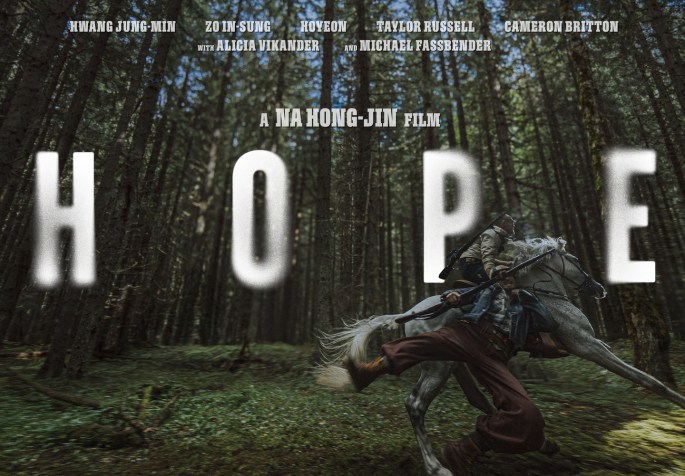
Everything that has been revealed about Na Hong-jin’s Hope (2026) — the story, the themes, the cast, the behind-the-scenes obsessions, and what it all means — collected and broken down in one place.
Ten Years of Silence
When The Wailing ended in 2016, nothing was resolved. That was the point. Na Hong-jin took the film to the Cannes Directors’ Fortnight, set a new benchmark for Korean genre cinema, and disappeared.
Ten years later, he’s back. And this time the scale is different — a Hollywood ensemble, the Cannes Competition, a first installment budget of approximately $37 million USD with the entire trilogy projected to exceed $75 million (100 billion KRW), and a vision that spans three films.
The Story — From a Tiger Sighting to the End of the World
The setting is Hopo, a port village near the DMZ in the 1970s and 80s. A place where Cold War tension and information blackouts are the permanent condition. A fisherman reports seeing a tiger. Wild tigers have been extinct in Korea for decades. The report is dismissed. Then people in the village start to disappear.
Anyone who knows Na Hong-jin’s work already understands — the tiger is not a tiger.
The film moves from a deeply local Korean folk mystery to something cosmically vast — a layered escalation designed to dismantle the audience’s psychological defenses. The familiar locality of a closed-off Korean village makes the arrival of something inhuman far more destabilizing. If The Wailing started with a village and ended with unanswerable darkness, Hope starts where that darkness left off.
The title itself is double-layered. Hope is both the name of the film and the name of the village — Hopo (호포항). For the people inside it, the word means something to hold onto. For whatever is arriving from outside, it may mean opportunity.
The Central Theme — When Good Intentions Become Catastrophe
Na Hong-jin has stated this directly.
“I’ve noticed throughout society how someone’s good intentions, filtered through differences in position and perspective, can ultimately lead to catastrophe. I wanted to capture that in this film.”
The village police chief Beomsuk (Hwang Jung-min) acts from a sense of duty — he needs to keep the civilian population calm. The hunter Seonggi (Jo In-sung) tracks the threat from instinct and obligation. The rookie officer Seonge (HoYeon) holds to her principles when everyone around her is abandoning theirs. All three share a good starting point. But the crack that an unknown presence opens between them transforms that goodness into suspicion and violence.
This is the question Na Hong-jin has asked across three films. Hope takes it to a universal scale: what we believe to be our virtue may be another person’s — or another species’ — catastrophe.
Omega — A Trilogy and an Apocalypse
Hope is not a single film. It is the beginning of a saga. Na Hong-jin expanded what was originally one story into a trilogy. The first installment alone carries a reported budget of approximately $37 million USD, with the entire trilogy projected to exceed $75 million (100 billion KRW) — unprecedented in Korean film history.
Images released from the Romanian church location speak to the scale. The director’s initials carved into iron bars. Blood running down windows. Alphabetical gravestones. The Omega symbol (Ω) — the end of Revelation. A creature swallowing a rainbow whole. Something that looks like the sun but has red limbs.
This film is oriented toward what genre theorists call Ontological Horror* — and the visual language already released makes that unmistakable.
* Ontological Horror refers not to fear of a physical threat, but to fear that strikes at the nature of existence itself — who we are, what reality is, whether human life carries any meaning at all. It’s not the monster that terrifies. It’s the realization of how fragile and insignificant human existence looks in the monster’s presence.
The Cast — Two Languages, Two Worlds
One name worth noting before the cast: cinematographer Hong Kyung-pyo, whose work on The Wailing and Bong Joon-ho’s Parasite helped define the visual language of modern Korean cinema, returns as director of photography.
The casting goes beyond star power. It visualizes the film’s central preoccupation with the breakdown of communication.
Hwang Jung-min, Jo In-sung & HoYeon
The village police chief Beomsuk (Hwang Jung-min) works to keep civilian anxiety from boiling over near the DMZ. The hunter Seonggi (Jo In-sung) ranges across mountains and coastline tracking the predator. The rookie officer Seonge (HoYeon) holds to her principles when everyone around her is abandoning theirs. These three form the bedrock of Korean realism at the story’s center.
Hwang Jung-min appeared in The Wailing (2016) as Ilgwang, the shaman — one of the most unsettling performances in that film. He is one of the most trusted actors in Korean cinema. HoYeon is known globally from Squid Game — the fact that Na Hong-jin cast her is already a signal.
Michael Fassbender, Alicia Vikander, Taylor Russell & Cameron Britton
Real-life married couple Fassbender and Vikander play alien presences. Na Hong-jin’s reasoning: “Playing a non-human entity requires a kind of non-verbal trust that only a real relationship can produce.”
There’s a behind-the-scenes detail worth knowing. Scheduling conflicts made it impossible for both actors to be on set simultaneously on certain days. Na Hong-jin solved it with stand-in shooting — one actor performing toward an empty space where the other would later be placed. In the finished scenes, the gap is invisible.
Also joining the alien ensemble: Taylor Russell — known for Bones and All and Waves — and Cameron Britton, whose portrayal of serial killer Ed Kemper in Mindhunter made him one of the most watchable character actors working today. The international cast now spans three continents.
This is a bilingual film — Korean and English in simultaneous use. The language barrier isn’t a logistical detail. It functions as a symbolic boundary: deepening misunderstanding between characters, amplifying fear, making the gulf between human and non-human feel structural rather than incidental. The collision between Hollywood’s register and Chungmuro’s realism generates its own friction — and Na Hong-jin is using that friction deliberately.
Technical Obsession — Ten Months for Half a Day
Na Hong-jin’s perfectionism has always pushed technical limits. On Hope, it crossed into a different category entirely.
A single sequence — Jo In-sung being snatched from horseback, shot on location at Retezat National Park in Romania — required ten months of preparation for half a day of filming.
Five months of horseback riding and action training in Korea. Three months of precise pre-visualization. Two months of on-location adaptation and rehearsal. The shot was captured in natural light at 120fps — high-speed cinematography chosen specifically to render the alien’s movement with what Na Hong-jin describes as “supernatural fluidity.” The result is something a standard frame rate cannot produce.
Cannes + Neon
Hope enters the Cannes Film Festival Competition in 2026 — Na Hong-jin’s second time at Cannes. US distribution has been confirmed by Neon, the company that brought Bong Joon-ho’s Parasite to American audiences. That’s not a coincidence. It’s a statement of intent.
Summer 2026
The fear that our own goodness can become someone else’s catastrophe. Na Hong-jin has carried that question across three films. Hope delivers it at the scale of human extinction.
The highest point Korean cinema has ever reached, or the deepest abyss. Either way — this summer matters.
Before You Watch — Na Hong-jin’s Three Films
Three films. That’s the entire filmography. All three changed Korean genre cinema. Watch them before Hope arrives.
The Chaser (추격자, 2008) — Netflix His debut. Based on a real serial killer case. The film that reset the standard for Korean thrillers overnight. Starring Kim Yun-seok and Ha Jung-woo. Watch on Netflix →
The Yellow Sea (황해, 2010) — Netflix A Yanbian Korean-Chinese taxi driver accepts a contract killing and crosses into Korea. Two and a half hours without room to breathe. Watch on Netflix →
The Wailing (곡성, 2016) One of the most analyzed films in Korean cinema history. Cannes Directors’ Fortnight. The ending is still being argued about. Start here if you’ve seen nothing else. Although it recently left Netflix, you can still stream it on Disney+ in many regions. It’s also available to rent or purchase on Apple TV and Amazon Prime Video.
Some links in this post may be affiliate links. If you make a purchase through them, I may earn a small commission at no extra cost to you.
 K-wave Insider