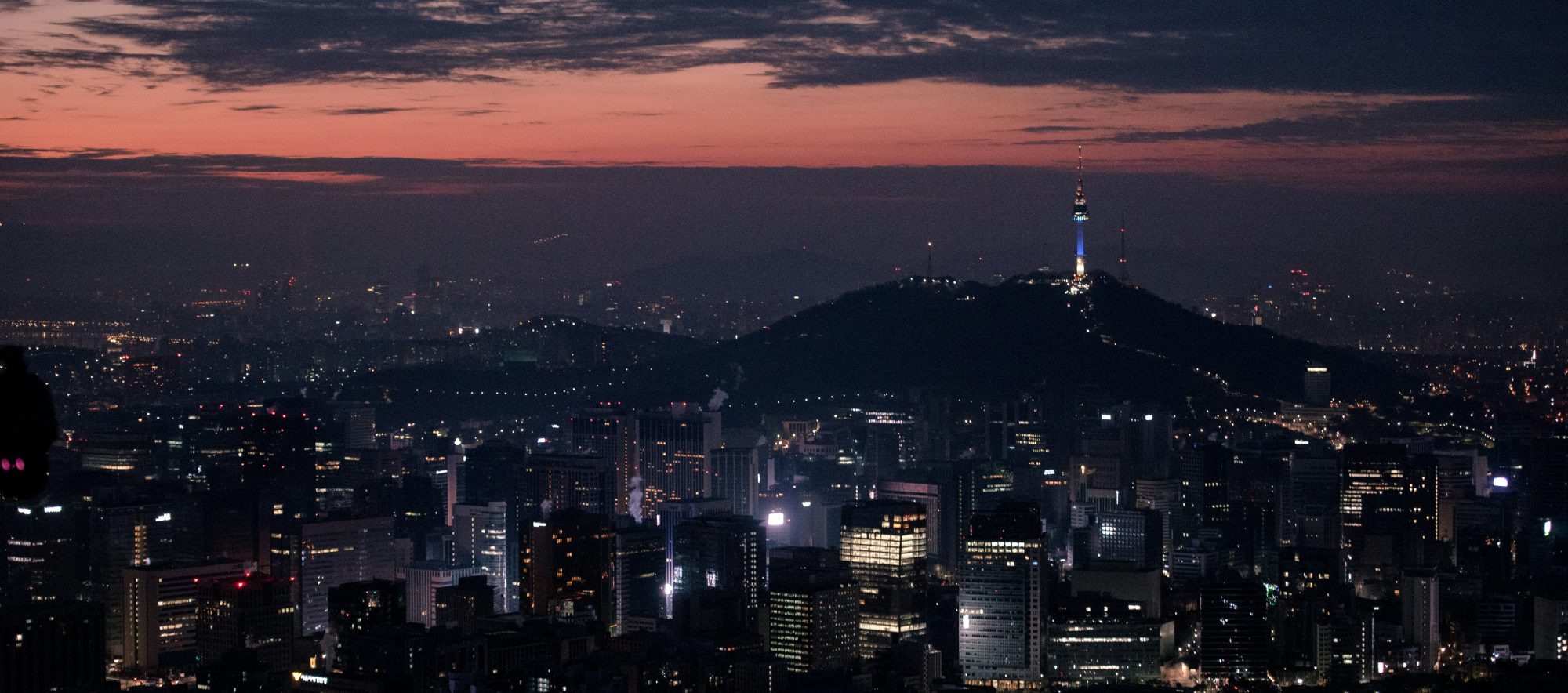

Han River. Namsan. Hangang-daero. This one comes with an address.
A track from BLINGY. Aggressive drums and distorted bass underneath, with choir, rap, and melodic singing layered over it.
SM Entertainment describes the song as spreading light-like positive energy across Seoul, the group’s home base.
If the title track “BLINGY” was fire, this one is light and signal. And Seoul shows up by name. The Han River. Namsan. K-pop songs rarely name a city this specifically.
NCT 127 “Legacy” — Korean Meaning & Lyrics Explained
Intro — Do-si Wi Melody (도시 위 Melody)
Ay what’s up Seoul
Legacy Do-si Wi Melody
Legacy 도시 위 Melody
Legacy — melody over the city
Jeong-sin-eop-ge Hae Are you scared?
정신없게 해 Are you scared?
Making you dizzy — are you scared?
Now you’d better see
(You’d better)
Geom-eun Bam Kkeut-e
검은 밤 끝에
At the end of the black night
Jak-eun Light Little remedy
작은 Light little remedy
A small light, little remedy
Bit-bang-ul Sso-da Nae-rin Da-eum
빗방울 쏟아 내린 다음
After the raindrops poured down
Feel the gravity
The song opens by addressing Seoul directly.
Jeong-sin-eop-da (정신없다, “dizzy/hectic”) — to have no mind left, meaning scattered to the point of losing your bearings. Here, it’s something they intend to do to you.
Geom-eun bam (검은 밤, “black night”) — not just night, but specified as black. A modifier that emphasizes the density of the dark. And what arrives at the end of it isn’t a grand light. It’s jak-eun light (작은 Light), a small one.
Then gravity. After the rain pours, you feel gravity. The sensation of your feet finding the ground after floating. It’s the first signal of what becomes “waking up with feet on the ground.”
Verse 1 — Han-gang Wi Sae-gin Chord (한강 위 새긴 Chord)
Eo-dum-e Neon flash
어둠에 Neon flash
Neon flash in the darkness
Seo-ul-ui Signal flash
서울의 Signal flash
Seoul’s signal flash
Cho-rok-bit Tta-ra Dash
초록빛 따라 Dash
Dash along the green light
Never gon’ hold me back
Eo-ryeo-un Gil Geu-ryeo-naen Past
어려운 길 그려낸 Past
A past that drew out the hard road
Imma go do the most
Planted the seeds
Hon-ran Sok-e Han-gang Wi Sae-gin Chord
혼란 속에 한강 위 새긴 Chord
A chord carved on the Han River, amid the chaos
Han-gang (한강, “Han River”) — the river running through Seoul. For people who live there, it isn’t just geography. Walking or cycling along the Han at night is ordinary Seoul life.
Sae-gi-da (새기다, “to engrave/carve”) — cutting something in deep, the way you carve stone. Used for tattoos, gravestones, memory. Han-gang wi sae-gin chord (한강 위 새긴 Chord) is carving a chord onto the surface of the river.
Carving something onto water isn’t physically possible. Which makes the phrase sound like turning a momentary sound into a permanent mark.
Right before it comes “planted the seeds.” Planting and carving. Both take time before you see the result.
Cho-rok-bit (초록빛, “green light”) — literally green-colored light. But with tta-ra dash (따라 Dash) attached, and with the actual road name Hangang-daero and “Green light” returning in Verse 2, the image of Seoul’s night roads and a go signal layers on top.
Pre-Chorus — Bal-ja-guk-eul Tta-ra (발자국을 따라)
Jam-e Deul-ji An-neun
잠에 들지 않는
That never falls asleep
Do-si Sok-e Thunder
도시 속에 Thunder
Thunder inside the city
Nat-seon Pa-dong Dwi-ro
낯선 파동 뒤로
Behind the unfamiliar waves
Seon-myeong-hae-jin Color
선명해진 Color
Colors that got sharper
Sae-ro-un Gam-gak-i
새로운 감각이
A new sensation
Nam-gyeo-jil I Culture
남겨질 이 Culture
This culture that will remain
Yeah Bal-ja-guk-eul Tta-ra
Yeah 발자국을 따라
Yeah, following the footprints
Bi-chi Doe-neun Future
빛이 되는 Future
A future that becomes light
Thunder, color, culture, future stack in order. From the noise of a city that doesn’t sleep, to sharpened colors, to a culture that will remain, to a future that becomes light.
Bal-ja-guk (발자국, “footprint”) — the mark left by walking. Bal-ja-guk-eul tta-ra bi-chi doe-neun future (발자국을 따라 빛이 되는 Future) says that following the traces you’ve left is what turns into a shining future.
That’s exactly where the song title meets the lyric. Legacy as footprints becoming light.
Nam-gyeo-jil (남겨질, “that will remain”) — future tense. Not a culture that has already been left behind, but one that will be. Read as a track on a tenth-anniversary album, the tense carries weight.
Chorus — Nam-san Wi-neun Bal-a (남산 위는 밝아)
(Legacy)
Do-hwa-seon-e Raindrop
도화선에 Raindrop
A raindrop on the fuse
Tae-yang Bit-eul Kkae-wo
태양 빛을 깨워
Waking the sunlight
Han-gang Wi-reul Gam-ssa
한강 위를 감싸
Wrapping around the Han River
(Legacy legacy)
Ttang-eul Dit-go Kkae-eo-na
땅을 딛고 깨어나
Waking up with feet on the ground
Cho-rok-bit-eul Tta-ra
초록빛을 따라
Following the green light
Nam-san Wi-neun Bal-a
남산 위는 밝아
Namsan is lit up
(Legacy legacy)
Do-hwa-seon (도화선, “fuse”) — the cord you light to set off explosives. A raindrop lands on it. By any normal logic, the fire should go out.
Instead the next line is tae-yang bit-eul kkae-wo (태양 빛을 깨워), waking the sunlight. Not extinguished. The sun wakes up. The image runs against expectation.
Gam-ssa-da (감싸다, “to wrap around”) — to drape or cover something protectively. Sunlight wrapping the Han River means holding the whole river in light.
Ttang-eul dit-da (땅을 딛다, “to plant one’s feet on the ground”) — the gravity from the intro completes itself here. Coming down from floating, feet on the ground, waking up.
Nam-san (남산, “Namsan”) — a mountain in central Seoul, topped by N Seoul Tower and one of the city’s most recognizable landmarks. The Han River and Namsan. Two landmarks that define Seoul, paired inside one chorus.
Chorus (continued) — Am-jeon Sok-ui Neon Sign (암전 속의 Neon sign)
Do-hwa-seon-e Raindrop
도화선에 Raindrop
A raindrop on the fuse
(Legacy legacy)
Keep it going worldwide
(Energy energy)
Ttang-eul Dit-go Kkae-eo-na
땅을 딛고 깨어나
Waking up with feet on the ground
Sae Jwa-pyo-reul Yeol-eo-nwa
새 좌표를 열어놔
Opening up new coordinates
Am-jeon Sok-ui Neon Sign
암전 속의 Neon sign
A neon sign in the blackout
(Legacy legacy)
Jwa-pyo (좌표, “coordinates”) — the mathematical and geographic term for a position. Sae jwa-pyo-reul yeol-eo-nwa (새 좌표를 열어놔) isn’t about going somewhere new. It’s closer to creating a point that wasn’t on the map.
Am-jeon (암전, 暗轉, “blackout”) — the word for a stage or screen going completely dark, used especially in theater and film.
A neon sign switches on inside that blackout. The only thing burning in total darkness.
Verse 2 — Han-gang-dae-ro Wi-ro Green Light (한강대로 위로 Green light)
Strobe light
Eum-ak-i Teo-jyeo It’s go time
음악이 터져 It’s go time
Music explodes — it’s go time
Sae-ro-un Gil We on low ride
새로운 길 We on low ride
New road — we on low ride
Han-gang-dae-ro Wi-ro Green light
한강대로 위로 Green light
Green light over Hangang-daero
Out in the open and I don’t hide
Jwa-pyo-reul Jjik-eo We worldwide
좌표를 찍어 We worldwide
Marking the coordinates — we worldwide
Ka-me-ra Kyeo-jyeo It’s showtime
카메라 켜져 It’s showtime
Camera on — it’s showtime
I Se-gye Neo-meo-ro Both sides
이 세계 너머로 Both sides
Beyond this world — both sides
What you say?
Han-gang-dae-ro (한강대로, “Hangang-daero”) — an actual road in Seoul. Dae-ro (대로, 大路) means major thoroughfare, the suffix attached to Seoul’s arterial roads. Hangang-daero runs from Seoul Station toward the river.
After the Han River and Namsan, this is the third real place name. The song doesn’t use Seoul as metaphor. It gives an address.
Jwa-pyo-reul jjik-da (좌표를 찍다, “to mark coordinates”) — it connects back to opening new coordinates in the chorus. From opening to marking. The point that was opened now gets a pin in it.
Verse 2 (continued) — Bal-mit-e Melody (발밑에 Melody)
Slide with the beat
Bal-mit-e Melody
발밑에 Melody
Melody underfoot
Sum-juk-in Bam Wi-ro
숨죽인 밤 위로
Over the hushed night
We light up the street
You could try
but these guys ain’t flyer than me
Ol-la-ga Deo Nop-i
올라가 더 높이
Going up, higher
Betcha like what you see yeah
Bal-mit (발밑, “underfoot”) — directly beneath your feet. The spot a walking person never notices. Melody being underfoot means it’s already laid down, whether or not you go looking for it.
Sum-juk-i-da (숨죽이다, “to hold one’s breath”) — going silent, making no sound. Used for tension or watching something unseen. Sum-juk-in bam (숨죽인 밤) is a night holding its breath.
It pairs with jam-e deul-ji an-neun do-si (잠에 들지 않는 도시) from the pre-chorus. A city that isn’t asleep but is holding its breath.
To read this line properly you have to know Seoul. One of the things visitors most want to experience here is the city at night. Going out, exercising, wandering wherever you want — and being safe doing it. Late-night cafés are easy to find. Sitting by the Han River until sunrise doesn’t require any particular courage.
So when this song talks about lighting up the night, it isn’t the image of cutting through dangerous darkness. It’s closer to joining a night that’s already awake.
Bridge — Ttok-gat-eun Doppelganger (똑같은 Doppelganger)
City lights Hon-ja-yeot-deon Bam-eun
City lights 혼자였던 밤은
City lights — the nights I was alone
It’s our time Ui-sim Tta-win Eop-gi-e
It’s our time 의심 따윈 없기에
It’s our time — because there’s no doubt
Seen it from the start
Feel it in my heart
Kkeut-nae Sa-ra-ji-ji An-a
끝내 사라지지 않아
In the end, it doesn’t disappear
Eo-dum Sok-e Neo-wa Na
어둠 속에 너와 나
You and me in the darkness
Dul-eun Ttok-gat-eun Doppelganger
둘은 똑같은 Doppelganger
The two of us, identical doppelgangers
U-rin Na-ta-na-myeon
우린 나타나면
When we show up
Pan-eul Ba-kkwo Bangaranga
판을 바꿔 Bangaranga
We change the game — bangaranga
Sae-gyeo-ji-neun Energy
새겨지는 Energy
Energy being carved in
Seo-ul Wi-ui Melody
서울 위의 Melody
Melody over Seoul
Everybody knows that we gon’
Live inside their memory yeah
Doppelganger — originally a term for someone’s uncanny double. Here the threatening older meaning is stripped away. Dul-eun ttok-gat-eun doppelganger (둘은 똑같은 Doppelganger) — you and I are doubles because we move as one.
Pan-eul ba-kku-da (판을 바꾸다, “to change the game”) — pan is the arena or situation where something plays out. Changing the pan means overturning the rules themselves.
Sae-gyeo-ji-neun energy (새겨지는 Energy) — han-gang wi sae-gin chord (한강 위 새긴 Chord) from Verse 1 returns here. First a chord carved onto the river, now energy being carved in. And the very next line is seo-ul wi-ui melody (서울 위의 Melody), which closes the loop with do-si wi melody (도시 위 Melody) from the intro.
It opens on melody over the city and ends on melody over Seoul. The city gets its name somewhere in between.
And immediately after: “Live inside their memory.” The chord carved on the Han River in Verse 1 becomes energy, and finally lives inside other people’s memory. That’s where the title completes itself most directly.
What Does “Han-gang Wi Sae-gin Chord” (한강 위 새긴 Chord) Mean in “Legacy”?
Han-gang wi sae-gin chord (한강 위 새긴 Chord) literally means “a chord carved on the Han River.”
The key word is sae-gi-da (새기다), to carve or engrave something so that it remains. Korean uses it for stone, tattoos, and even memories.
But you can’t carve music onto water.
That’s what makes the line work. A chord disappears as soon as it’s played, and the river never stops moving. The lyric treats both as if they could leave a permanent mark.
And because the place is specifically the Han River, the image isn’t abstract. It’s a musical mark left on Seoul itself.
What Does “Do-hwa-seon” (도화선) Mean in “Legacy”?
Do-hwa-seon (도화선, 導火線) literally means the line that leads fire. It’s the fuse connected to explosives.
But Korean uses it figuratively far more often. Saying an event became the do-hwa-seon means it was the trigger for something much bigger — the small starting point of an explosive outcome.
Do-hwa-seon-e raindrop (도화선에 Raindrop) reads on both levels. Literally, a raindrop landing on a fuse. Figuratively, a small signal announcing something large.
And the result isn’t the fire going out. It’s tae-yang bit-eul kkae-wo (태양 빛을 깨워), waking the sunlight. Water doesn’t kill the flame — it calls up a bigger one. The song’s whole logic sits inside that single word.
What Is NCT 127’s “Legacy” Really About?
SM Entertainment described the track as spreading light-like positive energy across Seoul, the group’s home base.
Follow the lyrics and that description translates into actual addresses. The Han River. Namsan. Hangang-daero. Not metaphor — place names. Someone living in Seoul could trace the route.
The structure is precise too. It opens on do-si wi melody (도시 위 Melody) in the intro and closes on seo-ul wi-ui melody (서울 위의 Melody) in the bridge. “City” becomes “Seoul,” and the song ends.
And the whole thing runs on inversions. A small light at the end of a black night. A raindrop on a fuse that wakes the sun instead of killing it. A neon sign switching on inside a blackout. A doppelganger, once a figure of dread, turned into the closest possible ally.
Songs written for a city exist in every music tradition. Sinatra had his New York, Jay-Z had his. “Legacy” puts Seoul into that lineage in K-pop’s own language — not a city being missed from a distance, but one being driven through right now.
Bal-ja-guk-eul tta-ra bi-chi doe-neun future (발자국을 따라 빛이 되는 Future). The legacy this song describes isn’t monumental. It’s footprints turning into light. A signal sent to Seoul by a team ten years into the walk.
The title track runs entirely on fire — from a single ember to a burning glacier:
NCT 127 “BLINGY” — From an Ember to a Burning Glacier

Stray Kids refuse to pick between two options. The whole album runs on that:
Stray Kids “This & That” — Why They Refuse to Pick One

ATEEZ put a Korean chili pepper between a Cuban cigar and Spanish fuego:
ATEEZ “BAD” — Where Cheongyang Chili Meets a Latin Rhythm

After the Grammys announced an Asian Pop category, this song started sounding like a prediction. Where does it go from here?
BTS “Aliens” Lyrics Explained — What the Translation Misses

Is there a K-Pop song that clearly means something more — but you can’t tell what? Drop it in the comments and I’ll break it down.
Some links in this post may be affiliate links. If you make a purchase through them, I may earn a small commission at no extra cost to you.

