Five NCT 127 members standing beneath a vast golden sky for “Step Up”

NCT 127 “Step Up” Korean Meaning & Lyrics Explained

How to Enjoy a Moment That’s Truly Your Own


“Step Up” is breathless from the start. Alarms go off, everything runs without brakes, and even gravity loses its grip. In the middle of all that, they want you to watch 우리다운 순간 (uridaun sungan / “a moment that’s truly us”). Expressions like 뻔뻔한 자태 (ppeonppeonhan jatae / “brazen presence”) and 원하는 걸 난 놓지 못해 (wonhaneun geol nan nochi mothae / “I can’t let go of what I want”) show how they carry that confidence.

NCT 127 “Step Up” — Lyrics and Korean Meanings

Verse 1 — If You Can’t Avoid It, Enjoy It

I’m going crazy

피할 수 없으면 즐겨 Baby
Pihal su eopseumyeon jeulgyeo Baby
If you can’t avoid it, enjoy it, baby

Pop pop pop

터뜨려 폭주해 Be savage
Teotteuryeo pokjuhae Be savage
Let it burst, run wild, be savage

피할 수 없으면 즐겨 (pihal su eopseumyeon jeulgyeo / “if you can’t avoid it, enjoy it”) is a familiar saying in Korea, heard in settings such as military service and school. It is a way of facing something you have to do: if you cannot get out of it, try to find some enjoyment in it.

Here it sounds rougher because of what follows. 터뜨려 (teotteuryeo / “let it burst”) and 폭주해 (pokjuhae / “run wild; go out of control”) urge you to throw yourself in. The force of 폭주해 here comes less from speed than from the sense that the movement can no longer be controlled.

귓가에 쏟아지는 비상경보
Gwitgae ssodajineun bisang gyeongbo
Emergency alarms pour into my ears

That’s my kick

빨라진 Breath
Ppallajin Breath
My breathing quickens

통제를 잃은 Gravity
Tongjereul ireun Gravity
Gravity has lost control

비상경보 (bisang gyeongbo / “emergency alarm”) normally tells you to stop or get out. Then comes “That’s my kick” — the sound itself is the thrill. 쏟아지는 (ssodajineun / “pouring”) makes it more than an alarm going off once or twice; it fills the ears completely. Breathing speeds up, gravity loses its grip, and the exaggeration paints that floating, weightless rush.

O to the N E O F O N E

달려들어 Freak
Dallyeodeureo Freak
Charge in, freak

I’m rolling up in this city

Loco 다 같이
Loco da gachi
Go crazy, all together

Get loud 날뛰지
Get loud nalttwiji
Get loud and run wild

Come on get down

if you wanna get down

“O to the N E O F O N E” spells out “ONE OF ONE”—something unique, with no other quite like it. Here, it reads as a boast that there’s no other team like them.

달려들어 (dallyeodeureo / “charge in”) and 날뛰지 (nalttwiji / “run wild”) both call for forceful movement. 날뛰다 (nalttwida / “to run wild”) suggests tearing around, rather than dancing neatly.

Then 다 같이 (da gachi / “all together”) pulls the listener in too. They’ve rolled into the city, and this is the part where they wave everyone around them over to shout and go wild with them.

Pre-Chorus — A Moment That’s Truly Us

잘 봐
Jal bwa
Watch closely

어느 누구보다
Eoneu nuguboda
More than anyone else

우리다운 순간
Uridaun sungan
A moment that’s truly us

No we ain’t never coming down

The 우리다운 (uridaun / “true to who we are”) in 우리다운 순간 comes from -답다 (-dapda / “to be characteristic of; to be fitting for”). It describes a quality that makes someone recognizably themselves.

어느 누구보다 (eoneu nuguboda / “more than anyone else”) does make a comparison. But what follows is 우리다운 순간: the moment when they feel most like themselves. 잘 봐 (jal bwa / “watch closely”) asks the listener to watch them show what kind of team they are. “Never coming down” keeps that confidence and excitement going.

Chorus — Step Up

Step up step up

step up and get blasted

Step up step up

I’m bringing the madness

Step up step up

you know what just happened

What you know about it

see me stepping ’bout to blow like

“Step up” means come forward, or move up a level. In this chorus it reads as a dare — try keeping up with this. “Madness” and “blow” sit comfortably next to 폭주해 (pokjuhae) and 터뜨려 (teotteuryeo) from the opening verse. Rather than adding detail, the chorus repeats itself and pushes you to jump in.

Verse 2 — Born With This Brazen Presence

You say you wanna

wanna do it like me

Ice cold killer

’bout to go deep freeze

날카로운 눈빛을 세운 뒤
Nalkaroun nunbicheul seun dwi
After sharpening our gaze

우린 마지막처럼 Growling
Urin majimakcheoreom Growling
We’re growling as if it were our last time

After the taunt—”you want to do it like me?”—comes something cold and sharp. 눈빛을 세우다 (nunbicheul seuda / “to sharpen one’s gaze”) makes the look feel like a blade.

마지막처럼 (majimakcheoreom / “as if it were the last time”) carries the force of emptying everything they have into this one. It matches the momentum of the track — push all the way to the end.

Everybody rocking

with chill and swag

타고났지 뻔뻔한 자태
Tagonatji ppeonppeonhan jatae
We were born with this brazen presence

Why so sick? 또 뭐가 두려워
Why so sick? Tto mwoga duryeowo
Why so sick? What else is there to fear?

Go for it 못할 게 없는 걸
Go for it motal ge eomneun geol
Go for it; there’s nothing we can’t do

뻔뻔하다 (ppeonppeonhada / “to be shameless or brazen”) usually criticizes someone who acts without embarrassment when they should feel it. Here, alongside “chill and swag,” it sounds like a boast about carrying yourself without worrying about other people’s reactions.

자태 (jatae / “appearance; bearing”) describes how someone looks or carries themselves. It gives that attitude a visible form. Then 타고났지 (tagonatji / “we were born with it”) adds the boast that they did not even have to work at it.

또 뭐가 두려워 (tto mwoga duryeowo / “what else is there to fear?”) and 못할 게 없는 걸 (motal ge eomneun geol / “there’s nothing we can’t do”) put that attitude into words. They make trying something sound like the obvious next move.

Pre-Chorus, Continued — I Can’t Let Go of What I Want

Take 원하는 걸 난 놓지 못해
Take wonhaneun geol nan nochi mothae
Take—I can’t let go of what I want

So you better get out of my way

I know that you won’t

be forgetting our name

놓지 못해 (nochi mothae / “can’t let go”) describes being unable to release something in your hand, but it works for goals and desires too. Paired with 원하는 걸 (wonhaneun geol / “what I want”), it reads as not being able to give up on something you want.

놓지 못해 emphasizes being unable to let go. In this context, it suggests wanting something too much to give it up easily. What they want is never specified. “Get out of my way” and “you won’t be forgetting our name” show how hard they intend to push.

Bridge — Enjoy It However You Want

밤이 울려 퍼지게
Bami ullyeo peojige
So the night rings out

크게 소리를 질러봐
Keuge sorireul jilleobwa
Shout out loud

이 도시 위로 이 세상 위로
I dosi wiro i sesang wiro
Above this city, above this world

Bring the noise

울려 퍼지다 (ullyeo peojida / “to ring out and spread”) describes sound traveling outward. 밤이 울려 퍼지게 (bami ullyeo peojige / “so the night rings out”) makes you picture the whole night filled with it. The sound moves past 이 도시 (i dosi / “this city”) from the first verse and out above the world.

Hey 보다 완벽해진 이 순간
Hey boda wanbyeokhaejin i sungan
Hey, this moment has become even more perfect

못 이룰 게 없잖아
Mot irul ge eopjana
There’s nothing we can’t achieve, you know

마음대로 즐겨봐
Maeumdaero jeulgyeobwa
Enjoy it however you want

보다 (boda / “more”) modifies 완벽해진 here. 보다 완벽해진 (boda wanbyeokhaejin / “having become more perfect”) describes the moment as even better than before.

The ending -잖아 (-jana / “you know; isn’t that right?”) in 못 이룰 게 없잖아 (mot irul ge eopjana / “there’s nothing we can’t achieve”) appeals to something the listener knows or is expected to agree with. It encourages a shared response: there’s nothing we can’t achieve, right?

마음대로 즐겨봐 (maeumdaero jeulgyeobwa / “enjoy it however you want”) returns to 피할 수 없으면 즐겨 from the opening. 즐겨봐 adds the sense of “give it a try.” Here, with 마음대로 (maeumdaero / “however you like”), it sounds encouraging: enjoy the moment on your own terms.

What Does “Step Up” Ask You to Enjoy?

The opening 피할 수 없으면 즐겨 assumes something you’d rather avoid. But the alarms and the quickened breath that follow are received as a thrill instead. By the end, the line is 마음대로 즐겨봐. Same verb both times — first about facing something unavoidable, then about playing however you want.

The Confidence in “A Moment That’s Truly Us”

우리다운, 타고났지, and 마음대로 all suit a song about acting without holding back for other people. They ask you to watch 우리다운 순간, then boast that this 뻔뻔한 자태 comes naturally. The confidence comes from showing who they are without embarrassment.

Why “Brazen” Sounds Like a Compliment Here

뻔뻔하다 normally sounds critical. But in this passage, nobody is being scolded. “Chill and swag” comes before it, and 또 뭐가 두려워 comes after.

Between those lines, 뻔뻔한 자태 describes carrying yourself without embarrassment or hesitation. Using a normally negative word to brag about yourself gives the line a playful edge.


More NCT 127 Korean lyric breakdowns:

NCT 127 “BLINGY” — From an Ember to a Burning Glacier

Five NCT 127 members standing beneath a vast golden sky in the BLINGY music video
Illustration: NCT 127 “BLINGY” / KwaveInsider

NCT 127 “Legacy” — A Signal Flare Sent to Seoul

NCT 127 ‘Piñata’ Korean Meaning & Lyrics Explained


More K-pop Korean lyric breakdowns:

Stray Kids “This & That” — Why They Refuse to Pick One

Illustrated thumbnail showing Stray Kids for “This & That”
Illustration: Stray Kids “This & That” / KwaveInsider

ATEEZ “BAD” — Where Cheongyang Chili Meets a Latin Rhythm

Illustrated thumbnail showing ATEEZ performing “BAD”
Illustration: ATEEZ “BAD” / KwaveInsider

BTS “Aliens” Lyrics Explained — What the Translation Misses

Illustration of BTS members in dark suits for “Aliens” lyrics analysis, exploring hidden Korean meanings behind the translation
Illustration: BTS “Aliens” Lyrics Explained / KwaveInsider

Which Korean expression in “Step Up” stood out to you? Share your thoughts in the comments, and tell us which NCT 127 song you’d like us to explain next.

Some links in this post may be affiliate links. If you make a purchase through them, I may earn a small commission at no extra cost to you.

Five NCT 127 members eating doughnuts inside a car at night for “Piñata”

NCT 127 ‘Piñata’ Korean Meaning & Lyrics Explained

Why “Piñata” Is More Than Just a Party Song


“Piñata” sounds like a party song from the start. Hit it, break it open, let everything inside spill out — that image runs through the track. The Korean lyrics also show where the party begins.

NCT 127 comes back with “Back in the town,” followed by 내 집이야 (nae jibiya / “I’m home”). From there, the energy keeps rising until the stage feels like a piñata ready to burst.

Several Korean phrases add details that are easy to flatten in English: 말 끝나기 무섭게 (mal kkeutnagi museopge / “before the words are even finished”), 다 쏟아내 봐 (da ssodanae bwa / “let it all pour out”), and 터지는 순간이 시작인 Party (teojineun sungani sijagin Party / “the moment it bursts is when the party begins”). Together, they trace the song from coming home to turning up the energy and finally letting it all burst out.

NCT 127 ‘Piñata’ — Korean Meaning & Lyrics Explained

Verse 1 — “내 집이야”: Finally Home

Back in the town

여기 드디어
yeogi deudieo
Finally, here

지면 위에 발을 딛어
jimyeon wie bareul dideo
I put my feet back on the ground

내 집이야
nae jibiya
I’m home

내 말 끝나기 무섭게
nae mal kkeutnagi museopge
Before I can even finish speaking

모두 Hit me up
modu Hit me up
Everyone hits me up

준비해 We gon’ turn it up
junbihae We gon’ turn it up
Get ready, we’re going to turn it up

In everyday Korean, 내 집이야 (nae jibiya) can simply mean “I’m home” or “I’m at home.” Coming after 여기 드디어 (yeogi deudieo / “finally, here”) and 지면 위에 발을 딛어 (jimyeon wie bareul dideo / “I put my feet back on the ground”), it feels like someone returning from a long trip and finally saying, “I’m home.”

말 끝나기 무섭게 (mal kkeutnagi museopge) uses the Korean pattern -기 무섭게 (-gi museopge / “as soon as”). The words are barely out before everyone starts hitting him up, and they’re already getting ready to turn up the energy.

We’re so hot 가끔은 해가 숨어
We’re so hot gakkeumeun haega sumeo
We’re so hot, sometimes even the sun hides

네가 알고 있던 화끈함은 잊어
nega algo itdeon hwakkeunhameun ijeo
Forget the kind of heat you thought you knew

When I hit the stage

Yeah I’m back again

Say my name 더 크게
Say my name deo keuge
Say my name louder

화끈함 (hwakkeunham / “bold, intense energy”) covers more than physical heat. It can feel hot, forceful, and uninhibited, with the sense of pushing forward without holding back. That fits naturally with the stage and crowd imagery that follows.

Pre-Chorus — No Hesitation

주저하지 마 더 거침없이 Blow
jujeohaji ma deo geochimeopsi Blow
Don’t hesitate, blow it up without holding back

어떤 순간도 We can’t go wrong
eotteon sungando We can’t go wrong
At any moment, we can’t go wrong

주저하지 마 (jujeohaji ma / “don’t hesitate”) and 거침없이 (geochimeopsi / “without holding back”) push in the same direction. Keep going and don’t hesitate.

Chorus — Let It All Spill Out

Ready to pop off!

다 쏟아내 봐
da ssodanae bwa
Let it all pour out

느낌은 완전 Jackpot
neukkimeun wanjeon Jackpot
It feels like a total jackpot

Like Piñata

셋을 세면 Strike
set-eul semyeon Strike
Count to three, then strike

소리 질러 Right now
sori jilleo Right now
Scream right now

다 쏟아내 봐 (da ssodanae bwa) fits the piñata image especially well. The verb 쏟아내다 (ssodanaeda / “to pour or spill everything out”) describes something inside coming out all at once. Here, that can be the energy and emotion built up through the song. Hit a piñata and everything spills out; the performance uses the same image for its own release of energy.

Ready to pop off!

숨이 차올라
sumi chaolla
I’m getting out of breath

크게 휘둘러 My mic
keuge hwidulleo My mic
Swing my mic wide

Like Piñata

셋을 세면 Strike
set-eul semyeon Strike
Count to three, then strike

지금부터 Showtime
jigeumbuteo Showtime
From now on, it’s showtime

The motion of striking a piñata blends easily with swinging a mic across the stage. Then comes 지금부터 Showtime (jigeumbuteo Showtime / “from now on, it’s showtime”). The burst leads straight into the performance.

Post-Chorus

Come on!

One time one time one time

터져 Confetti
teojyeo Confetti
Confetti bursts everywhere

One time one time

Like Piñata

터져 (teojyeo / “burst”) finally turns the image into something visible. Confetti fills the stage in place of whatever a real piñata would normally spill out.

Verse 2 — “손대는 것이 곧 Piñata” (sondaeneun geosi got Piñata / “whatever we touch becomes a piñata”)

It’s like that 다들 눈을 못 떼
It’s like that dadeul nuneul mot tte
No one can take their eyes off us

이렇게 빛나는 걸 처음 본 듯해
ireoke binnaneun geol cheoeum bon deuthae
Like they’ve never seen something shine like this before

변함이 없어 We’re still louder
byeonhami eopseo We’re still louder
Nothing has changed — we’re still louder

손대는 것이 곧 Piñata
sondaeneun geosi got Piñata
Whatever we touch becomes a piñata

With everyone already watching, 손대는 것이 곧 Piñata (sondaeneun geosi got Piñata / “whatever we touch becomes a piñata”) gives the sense that the moment NCT 127 touches something, people are waiting for it to burst into something spectacular.

그저 계속 망설임 없이
geujeo gyesok mangseorim eopsi
Just keep going without hesitation

Told you ‘I’m back again’

걸어 다녀 Street
georeo danyeo Street
Walking the street

바닥나는 Patience
badangnaneun Patience
Patience is running out

차오르는 Feel
chaoreuneun Feel
The feeling keeps rising

Now I got what you need

what you need what you need

바닥나는 (badangnaneun / “running out”) and 차오르는 (chaoreuneun / “rising or filling up”) move in opposite directions. Patience is running out while the feeling keeps rising. One drains away as the other keeps building toward the next burst.

Bridge — “터지는 순간이 시작인 Party” (teojineun sungani sijagin Party / “the moment it bursts is when the party begins”)

축제는 끝나지 않아 영원히
chukjeneun kkeutnaji ana yeongwonhi
The celebration never ends

Oh you better want it

want it like crazy

터지는 순간이 시작인 Party
teojineun sungani sijagin Party
The moment it bursts is when the party begins

So come and get some!

C’mon!

터지는 순간이 시작인 Party (teojineun sungani sijagin Party) ties the title to the song’s whole movement. A piñata reaches its biggest moment when it breaks open. Here, that burst opens the party.

The song has been moving toward it from the beginning: coming home, building the energy, counting to three, striking, and bursting into the celebration.

What Is NCT 127’s ‘Piñata’ About?

“Piñata” follows NCT 127 as they return, raise the energy, and turn the stage into a full celebration. It begins with 내 집이야 (nae jibiya) and keeps building through 다 쏟아내 봐 (da ssodanae bwa), Strike, 터져 Confetti (teojyeo Confetti), and Showtime.

The title image fits that movement: everything that has been building inside finally spills out at once.

What Does “손대는 것이 곧 Piñata” Mean?

Taken literally, 손대는 것이 곧 Piñata (sondaeneun geosi got Piñata) may sound unusual in English. With 다들 눈을 못 떼 (dadeul nuneul mot tte / “no one can take their eyes off us”) and “We’re still louder” just before it, the image is of people already watching NCT 127 closely and waiting for whatever they touch next to burst into something spectacular.

Why Does the Party Start When the Piñata Bursts?

The Korean lyric says it directly: 터지는 순간이 시작인 Party (teojineun sungani sijagin Party / “the moment it bursts is when the party begins”).

That line turns the burst into the starting signal for everything that follows.

Home → Build-up → Strike → Burst → Showtime


More NCT 127 Korean lyric breakdowns:

NCT 127 “BLINGY” — From an Ember to a Burning Glacier

Five NCT 127 members standing beneath a vast golden sky in the BLINGY music video
Illustration: NCT 127 “BLINGY” / KwaveInsider

NCT 127 “Legacy” — A Signal Flare Sent to Seoul


Stray Kids “This & That” — Why They Refuse to Pick One

Illustrated thumbnail showing Stray Kids for “This & That”
Illustration: Stray Kids “This & That” / KwaveInsider

ATEEZ “BAD” — Where Cheongyang Chili Meets a Latin Rhythm

Illustrated thumbnail showing ATEEZ performing “BAD”
Illustration: ATEEZ “BAD” / KwaveInsider

BTS “Aliens” Lyrics Explained — What the Translation Misses

Illustration of BTS members in dark suits for “Aliens” lyrics analysis, exploring hidden Korean meanings behind the translation
Illustration: BTS “Aliens” Lyrics Explained / KwaveInsider

Which Korean line in “Piñata” caught your ear? Share it in the comments, and tell me which song you’d like me to break down next.

Some links in this post may be affiliate links. If you make a purchase through them, I may earn a small commission at no extra cost to you.

Five NCT 127 members standing beneath a vast golden sky for “Legacy”

NCT 127 “Legacy” — A Signal Flare Sent to Seoul

Han River. Namsan. Hangang-daero. This one comes with an address.


A track from BLINGY. Aggressive drums and distorted bass underneath, with choir, rap, and melodic singing layered over it.

SM Entertainment describes the song as spreading light-like positive energy across Seoul, the group’s home base.

If the title track “BLINGY” was fire, this one is light and signal. And Seoul shows up by name. The Han River. Namsan. K-pop songs rarely name a city this specifically.

Audio: Legacy · NCT 127 / Source: NCT 127 (YouTube)


NCT 127 “Legacy” — Korean Meaning & Lyrics Explained

Intro — Do-si Wi Melody (도시 위 Melody)

Ay what’s up Seoul

Legacy Do-si Wi Melody
Legacy 도시 위 Melody
Legacy — melody over the city

Jeong-sin-eop-ge Hae Are you scared?
정신없게 해 Are you scared?
Making you dizzy — are you scared?

Now you’d better see
(You’d better)

Geom-eun Bam Kkeut-e
검은 밤 끝에
At the end of the black night

Jak-eun Light Little remedy
작은 Light little remedy
A small light, little remedy

Bit-bang-ul Sso-da Nae-rin Da-eum
빗방울 쏟아 내린 다음
After the raindrops poured down

Feel the gravity

The song opens by addressing Seoul directly.

Jeong-sin-eop-da (정신없다, “dizzy/hectic”) — to have no mind left, meaning scattered to the point of losing your bearings. Here, it’s something they intend to do to you.

Geom-eun bam (검은 밤, “black night”) — not just night, but specified as black. A modifier that emphasizes the density of the dark. And what arrives at the end of it isn’t a grand light. It’s jak-eun light (작은 Light), a small one.

Then gravity. After the rain pours, you feel gravity. The sensation of your feet finding the ground after floating. It’s the first signal of what becomes “waking up with feet on the ground.”


Verse 1 — Han-gang Wi Sae-gin Chord (한강 위 새긴 Chord)

Eo-dum-e Neon flash
어둠에 Neon flash
Neon flash in the darkness

Seo-ul-ui Signal flash
서울의 Signal flash
Seoul’s signal flash

Cho-rok-bit Tta-ra Dash
초록빛 따라 Dash
Dash along the green light

Never gon’ hold me back

Eo-ryeo-un Gil Geu-ryeo-naen Past
어려운 길 그려낸 Past
A past that drew out the hard road

Imma go do the most
Planted the seeds

Hon-ran Sok-e Han-gang Wi Sae-gin Chord
혼란 속에 한강 위 새긴 Chord
A chord carved on the Han River, amid the chaos

Han-gang (한강, “Han River”) — the river running through Seoul. For people who live there, it isn’t just geography. Walking or cycling along the Han at night is ordinary Seoul life.

Sae-gi-da (새기다, “to engrave/carve”) — cutting something in deep, the way you carve stone. Used for tattoos, gravestones, memory. Han-gang wi sae-gin chord (한강 위 새긴 Chord) is carving a chord onto the surface of the river.

Carving something onto water isn’t physically possible. Which makes the phrase sound like turning a momentary sound into a permanent mark.

Right before it comes “planted the seeds.” Planting and carving. Both take time before you see the result.

Cho-rok-bit (초록빛, “green light”) — literally green-colored light. But with tta-ra dash (따라 Dash) attached, and with the actual road name Hangang-daero and “Green light” returning in Verse 2, the image of Seoul’s night roads and a go signal layers on top.


Pre-Chorus — Bal-ja-guk-eul Tta-ra (발자국을 따라)

Jam-e Deul-ji An-neun
잠에 들지 않는
That never falls asleep

Do-si Sok-e Thunder
도시 속에 Thunder
Thunder inside the city

Nat-seon Pa-dong Dwi-ro
낯선 파동 뒤로
Behind the unfamiliar waves

Seon-myeong-hae-jin Color
선명해진 Color
Colors that got sharper

Sae-ro-un Gam-gak-i
새로운 감각이
A new sensation

Nam-gyeo-jil I Culture
남겨질 이 Culture
This culture that will remain

Yeah Bal-ja-guk-eul Tta-ra
Yeah 발자국을 따라
Yeah, following the footprints

Bi-chi Doe-neun Future
빛이 되는 Future
A future that becomes light

Thunder, color, culture, future stack in order. From the noise of a city that doesn’t sleep, to sharpened colors, to a culture that will remain, to a future that becomes light.

Bal-ja-guk (발자국, “footprint”) — the mark left by walking. Bal-ja-guk-eul tta-ra bi-chi doe-neun future (발자국을 따라 빛이 되는 Future) says that following the traces you’ve left is what turns into a shining future.

That’s exactly where the song title meets the lyric. Legacy as footprints becoming light.

Nam-gyeo-jil (남겨질, “that will remain”) — future tense. Not a culture that has already been left behind, but one that will be. Read as a track on a tenth-anniversary album, the tense carries weight.


Chorus — Nam-san Wi-neun Bal-a (남산 위는 밝아)

(Legacy)

Do-hwa-seon-e Raindrop
도화선에 Raindrop
A raindrop on the fuse

Tae-yang Bit-eul Kkae-wo
태양 빛을 깨워
Waking the sunlight

Han-gang Wi-reul Gam-ssa
한강 위를 감싸
Wrapping around the Han River

(Legacy legacy)

Ttang-eul Dit-go Kkae-eo-na
땅을 딛고 깨어나
Waking up with feet on the ground

Cho-rok-bit-eul Tta-ra
초록빛을 따라
Following the green light

Nam-san Wi-neun Bal-a
남산 위는 밝아
Namsan is lit up

(Legacy legacy)

Do-hwa-seon (도화선, “fuse”) — the cord you light to set off explosives. A raindrop lands on it. By any normal logic, the fire should go out.

Instead the next line is tae-yang bit-eul kkae-wo (태양 빛을 깨워), waking the sunlight. Not extinguished. The sun wakes up. The image runs against expectation.

Gam-ssa-da (감싸다, “to wrap around”) — to drape or cover something protectively. Sunlight wrapping the Han River means holding the whole river in light.

Ttang-eul dit-da (땅을 딛다, “to plant one’s feet on the ground”) — the gravity from the intro completes itself here. Coming down from floating, feet on the ground, waking up.

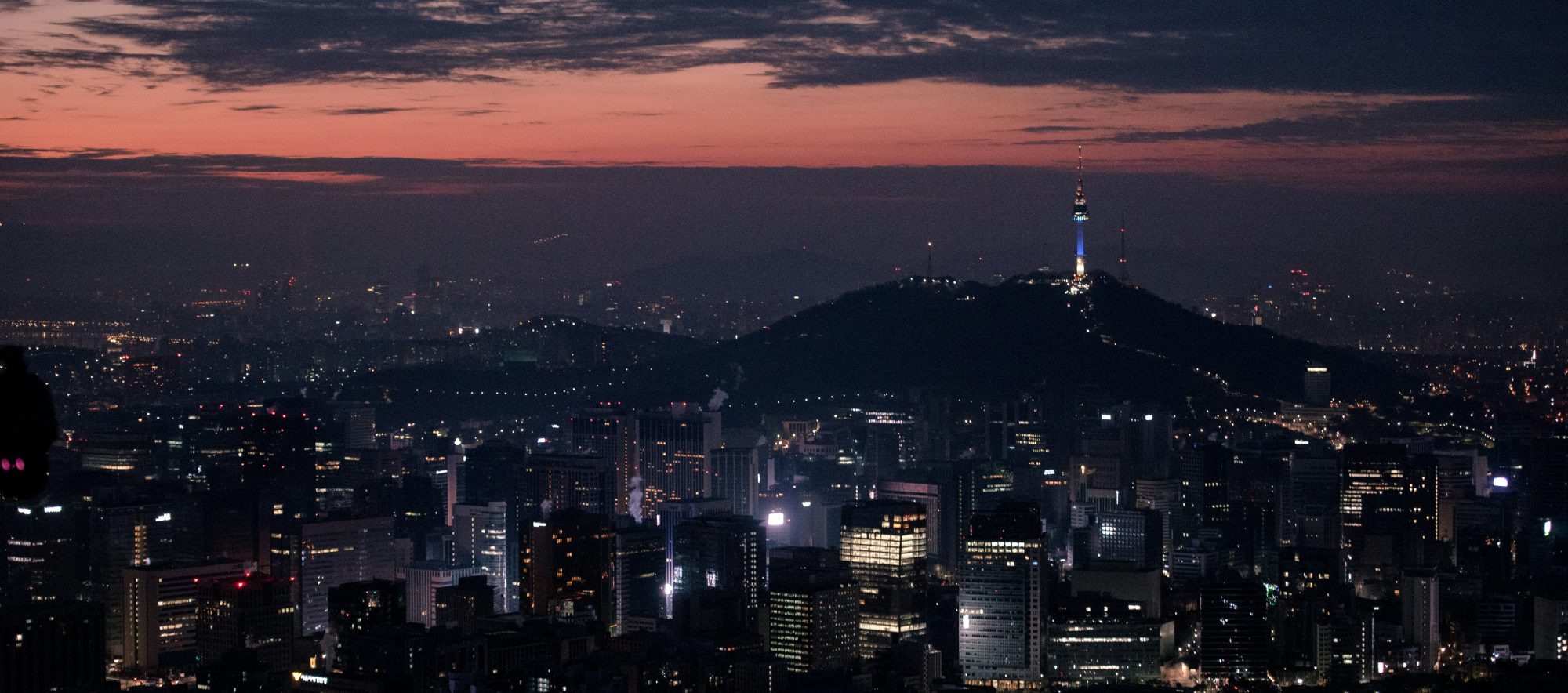
Nam-san (남산, “Namsan”) — a mountain in central Seoul, topped by N Seoul Tower and one of the city’s most recognizable landmarks. The Han River and Namsan. Two landmarks that define Seoul, paired inside one chorus.


Chorus (continued) — Am-jeon Sok-ui Neon Sign (암전 속의 Neon sign)

Do-hwa-seon-e Raindrop
도화선에 Raindrop
A raindrop on the fuse

(Legacy legacy)

Keep it going worldwide
(Energy energy)

Ttang-eul Dit-go Kkae-eo-na
땅을 딛고 깨어나
Waking up with feet on the ground

Sae Jwa-pyo-reul Yeol-eo-nwa
새 좌표를 열어놔
Opening up new coordinates

Am-jeon Sok-ui Neon Sign
암전 속의 Neon sign
A neon sign in the blackout

(Legacy legacy)

Jwa-pyo (좌표, “coordinates”) — the mathematical and geographic term for a position. Sae jwa-pyo-reul yeol-eo-nwa (새 좌표를 열어놔) isn’t about going somewhere new. It’s closer to creating a point that wasn’t on the map.

Am-jeon (암전, 暗轉, “blackout”) — the word for a stage or screen going completely dark, used especially in theater and film.

A neon sign switches on inside that blackout. The only thing burning in total darkness.


Verse 2 — Han-gang-dae-ro Wi-ro Green Light (한강대로 위로 Green light)

Strobe light

Eum-ak-i Teo-jyeo It’s go time
음악이 터져 It’s go time
Music explodes — it’s go time

Sae-ro-un Gil We on low ride
새로운 길 We on low ride
New road — we on low ride

Han-gang-dae-ro Wi-ro Green light
한강대로 위로 Green light
Green light over Hangang-daero

Out in the open and I don’t hide

Jwa-pyo-reul Jjik-eo We worldwide
좌표를 찍어 We worldwide
Marking the coordinates — we worldwide

Ka-me-ra Kyeo-jyeo It’s showtime
카메라 켜져 It’s showtime
Camera on — it’s showtime

I Se-gye Neo-meo-ro Both sides
이 세계 너머로 Both sides
Beyond this world — both sides

What you say?

Han-gang-dae-ro (한강대로, “Hangang-daero”) — an actual road in Seoul. Dae-ro (대로, 大路) means major thoroughfare, the suffix attached to Seoul’s arterial roads. Hangang-daero runs from Seoul Station toward the river.

After the Han River and Namsan, this is the third real place name. The song doesn’t use Seoul as metaphor. It gives an address.

Jwa-pyo-reul jjik-da (좌표를 찍다, “to mark coordinates”) — it connects back to opening new coordinates in the chorus. From opening to marking. The point that was opened now gets a pin in it.


Verse 2 (continued) — Bal-mit-e Melody (발밑에 Melody)

Slide with the beat

Bal-mit-e Melody
발밑에 Melody
Melody underfoot

Sum-juk-in Bam Wi-ro
숨죽인 밤 위로
Over the hushed night

We light up the street

You could try
but these guys ain’t flyer than me

Ol-la-ga Deo Nop-i
올라가 더 높이
Going up, higher

Betcha like what you see yeah

Bal-mit (발밑, “underfoot”) — directly beneath your feet. The spot a walking person never notices. Melody being underfoot means it’s already laid down, whether or not you go looking for it.

Sum-juk-i-da (숨죽이다, “to hold one’s breath”) — going silent, making no sound. Used for tension or watching something unseen. Sum-juk-in bam (숨죽인 밤) is a night holding its breath.

It pairs with jam-e deul-ji an-neun do-si (잠에 들지 않는 도시) from the pre-chorus. A city that isn’t asleep but is holding its breath.

To read this line properly you have to know Seoul. One of the things visitors most want to experience here is the city at night. Going out, exercising, wandering wherever you want — and being safe doing it. Late-night cafés are easy to find. Sitting by the Han River until sunrise doesn’t require any particular courage.

So when this song talks about lighting up the night, it isn’t the image of cutting through dangerous darkness. It’s closer to joining a night that’s already awake.


Bridge — Ttok-gat-eun Doppelganger (똑같은 Doppelganger)

City lights Hon-ja-yeot-deon Bam-eun
City lights 혼자였던 밤은
City lights — the nights I was alone

It’s our time Ui-sim Tta-win Eop-gi-e
It’s our time 의심 따윈 없기에
It’s our time — because there’s no doubt

Seen it from the start
Feel it in my heart

Kkeut-nae Sa-ra-ji-ji An-a
끝내 사라지지 않아
In the end, it doesn’t disappear

Eo-dum Sok-e Neo-wa Na
어둠 속에 너와 나
You and me in the darkness

Dul-eun Ttok-gat-eun Doppelganger
둘은 똑같은 Doppelganger
The two of us, identical doppelgangers

U-rin Na-ta-na-myeon
우린 나타나면
When we show up

Pan-eul Ba-kkwo Bangaranga
판을 바꿔 Bangaranga
We change the game — bangaranga

Sae-gyeo-ji-neun Energy
새겨지는 Energy
Energy being carved in

Seo-ul Wi-ui Melody
서울 위의 Melody
Melody over Seoul

Everybody knows that we gon’
Live inside their memory yeah

Doppelganger — originally a term for someone’s uncanny double. Here the threatening older meaning is stripped away. Dul-eun ttok-gat-eun doppelganger (둘은 똑같은 Doppelganger) — you and I are doubles because we move as one.

Pan-eul ba-kku-da (판을 바꾸다, “to change the game”) — pan is the arena or situation where something plays out. Changing the pan means overturning the rules themselves.

Sae-gyeo-ji-neun energy (새겨지는 Energy) — han-gang wi sae-gin chord (한강 위 새긴 Chord) from Verse 1 returns here. First a chord carved onto the river, now energy being carved in. And the very next line is seo-ul wi-ui melody (서울 위의 Melody), which closes the loop with do-si wi melody (도시 위 Melody) from the intro.

It opens on melody over the city and ends on melody over Seoul. The city gets its name somewhere in between.

And immediately after: “Live inside their memory.” The chord carved on the Han River in Verse 1 becomes energy, and finally lives inside other people’s memory. That’s where the title completes itself most directly.


What Does “Han-gang Wi Sae-gin Chord” (한강 위 새긴 Chord) Mean in “Legacy”?

Han-gang wi sae-gin chord (한강 위 새긴 Chord) literally means “a chord carved on the Han River.”

The key word is sae-gi-da (새기다), to carve or engrave something so that it remains. Korean uses it for stone, tattoos, and even memories.

But you can’t carve music onto water.

That’s what makes the line work. A chord disappears as soon as it’s played, and the river never stops moving. The lyric treats both as if they could leave a permanent mark.

And because the place is specifically the Han River, the image isn’t abstract. It’s a musical mark left on Seoul itself.


What Does “Do-hwa-seon” (도화선) Mean in “Legacy”?

Do-hwa-seon (도화선, 導火線) literally means the line that leads fire. It’s the fuse connected to explosives.

But Korean uses it figuratively far more often. Saying an event became the do-hwa-seon means it was the trigger for something much bigger — the small starting point of an explosive outcome.

Do-hwa-seon-e raindrop (도화선에 Raindrop) reads on both levels. Literally, a raindrop landing on a fuse. Figuratively, a small signal announcing something large.

And the result isn’t the fire going out. It’s tae-yang bit-eul kkae-wo (태양 빛을 깨워), waking the sunlight. Water doesn’t kill the flame — it calls up a bigger one. The song’s whole logic sits inside that single word.


What Is NCT 127’s “Legacy” Really About?

SM Entertainment described the track as spreading light-like positive energy across Seoul, the group’s home base.

Follow the lyrics and that description translates into actual addresses. The Han River. Namsan. Hangang-daero. Not metaphor — place names. Someone living in Seoul could trace the route.

The structure is precise too. It opens on do-si wi melody (도시 위 Melody) in the intro and closes on seo-ul wi-ui melody (서울 위의 Melody) in the bridge. “City” becomes “Seoul,” and the song ends.

And the whole thing runs on inversions. A small light at the end of a black night. A raindrop on a fuse that wakes the sun instead of killing it. A neon sign switching on inside a blackout. A doppelganger, once a figure of dread, turned into the closest possible ally.

Songs written for a city exist in every music tradition. Sinatra had his New York, Jay-Z had his. “Legacy” puts Seoul into that lineage in K-pop’s own language — not a city being missed from a distance, but one being driven through right now.

Bal-ja-guk-eul tta-ra bi-chi doe-neun future (발자국을 따라 빛이 되는 Future). The legacy this song describes isn’t monumental. It’s footprints turning into light. A signal sent to Seoul by a team ten years into the walk.


The title track runs entirely on fire — from a single ember to a burning glacier:

NCT 127 “BLINGY” — From an Ember to a Burning Glacier

Five NCT 127 members standing beneath a vast golden sky in the BLINGY music video
Illustration: NCT 127 “BLINGY” / KwaveInsider

Stray Kids refuse to pick between two options. The whole album runs on that:

Stray Kids “This & That” — Why They Refuse to Pick One

Illustrated thumbnail showing Stray Kids for “This & That”
Illustration: Stray Kids “This & That” / KwaveInsider

ATEEZ put a Korean chili pepper between a Cuban cigar and Spanish fuego:

ATEEZ “BAD” — Where Cheongyang Chili Meets a Latin Rhythm

Illustrated thumbnail showing ATEEZ performing “BAD”
Illustration: ATEEZ “BAD” / KwaveInsider

After the Grammys announced an Asian Pop category, this song started sounding like a prediction. Where does it go from here?

BTS “Aliens” Lyrics Explained — What the Translation Misses

Illustration of BTS members in dark suits for “Aliens” lyrics analysis, exploring hidden Korean meanings behind the translation
Illustration: BTS “Aliens” Lyrics Explained / KwaveInsider

Is there a K-Pop song that clearly means something more — but you can’t tell what? Drop it in the comments and I’ll break it down.

Some links in this post may be affiliate links. If you make a purchase through them, I may earn a small commission at no extra cost to you.

Five NCT 127 members standing beneath a vast golden sky in the BLINGY music video

NCT 127 “BLINGY” — From an Ember to a Burning Glacier

Ten years, five members, and one wick that won’t pull loose.


The title track from NCT 127’s seventh studio album, released August 24. It marks their tenth debut anniversary.

But this album carries more weight than a milestone release. Mark has left the group, and Doyoung and Jungwoo are serving in the military. This is the first promotion run by five members: Johnny, Yuta, Taeyong, Jaehyun, and Haechan.

Watch the music video. There’s a rough energy running through it. The song keeps saying they’re on fire, and the visuals carry that. Ten years of accumulated craft shows. If raw and unpolished is where the trend is right now, they landed on it precisely.

At the press conference, Taeyong said the album cover combines a map of Seoul with the group’s neo color, meant to signal a return to their beginnings. Johnny summed up the album in one word: chosim (초심), the original mindset you start with. Haechan described the last ten years as “my way.”

Jaehyun explained the title track this way: they keep setting out to find something blingy, but the song says those things are already inside them.

The lyrics carry that context. One line especially.

Video: NCT 127 “Blingy” Official MV / Source: SMTOWN (YouTube)

NCT 127 “BLINGY” — Korean Meaning & Lyrics Explained

Chorus — Teo-jin Bul-kkot A-rae (터진 불꽃 아래)

(I’ma blingy blingy blingy)

Teo-jin Bul-kkot A-rae
터진 불꽃 아래
Under the exploded firework

Feelin’ real blingy
Bringin’ that bounce
make the whole club shimmy
Ooh blingy eyes on my city
I’ma big dawg

Bul-eul Ji-pyeo Deo Heat it
불을 지펴 더 Heat it
Stoke the fire — heat it more

Ooh blingy Sim-jang-i Ttwi-ji
Ooh blingy 심장이 뛰지
Ooh blingy, my heart is pounding

Pi-eo-o-reun Flame
피어오른 Flame
A flame that rose up

yeah you might get dizzy
(I’ma blingy blingy blingy)

The whole song is built out of fire. Three instances in the chorus alone: an exploded firework, the act of stoking a fire, a flame that rose up.

Ji-pi-da (지피다, “to kindle/stoke”) — lighting a fire in a furnace or hearth, or keeping one alive so it keeps burning.

Pi-eo-o-reu-da (피어오르다, “to rise up”) — smoke or flame climbing upward. The verb contains pi-da, the word for a flower blooming, so in Korean it suggests a flame not just rising but opening outward as it grows.


Verse 1 — Nae Bi-haeng-gi-neun 808 (내 비행기는 808)

Nop-i Na-neun Sae-do Drop it
높이 나는 새도 Drop it
Even the bird flying high — drop it

Back to back to back

Kkeul-eo-dang-gyeo Nae Ol-ga-mi
끌어당겨 내 올가미
Pulling in my snare

Ha-na-dul-ssik Tae-wo Nae Bi-haeng-gi-neun 808
하나둘씩 태워 내 비행기는 808
Burning them one by one — my plane is an 808

Gu-reum-i Nae Wave
구름이 내 Wave
Clouds are my wave

He-eom-chi-neun Killer whales
헤엄치는 Killer whales
Killer whales swimming

127 Mob Ppa-reu-ge-bo-da-neun Meol-li Ga
127 Mob 빠르게보다는 멀리 가
127 Mob — go far rather than fast

Si-kkeu-reop-ge U-reo Make it loud
시끄럽게 울어 Make it loud
Cry out loud — make it loud

This verse holds the entire concept of the comeback.

NCT 127 built this era around “BLINGY JETS.” Members presented as a pilot crew flying in formation, each with a call sign, a jet design, and dog tags. A squadron over Seoul.

So “my plane is an 808” arrives. The 808 is the Roland TR-808 drum machine, one of the defining sounds of hip-hop’s low end. Saying the plane is an 808 reads as an image: what lifts him is the beat.

And then the decisive line. Ppa-reu-ge-bo-da-neun meol-li ga (빠르게보다는 멀리 가).

The line calls up a sentence familiar in Korea: go alone if you want to go fast, go together if you want to go far. Choosing duration and company over speed.

Sung by a team marking ten years with half its lineup changed.


Verse 1 (continued) — Sok-i Kkwae Ta-get-ji (속이 꽤 타겠지)

Double the heat
and I double the hype (Right)

Jam-eun Geul-leot-ji
잠은 글렀지
Sleep is off the table

Yeah we keep on buzzin’

Ne Bam-eul Mo-du Hum-chyeo
네 밤을 모두 훔쳐
Stealing all your nights

Sok-i Kkwae Ta-get-ji Burnin’
속이 꽤 타겠지 Burnin’
Your insides must be burning — burnin’

Sok-i ta-da (속이 타다, “insides burning”) — literally, the inside of the body burns. It’s a Korean idiom for anxiety or frustration, the sensation of drying out from worry.

It works on two levels here. The song runs on fire imagery, so it’s literal burning. Idiomatically, it’s someone eaten up with impatience. The English “Burnin'” tacked onto the end connects both layers.

Geul-leot-da (글렀다, “no chance/hopeless”) — already ruined, already past saving. Jam-eun geul-leot-ji (잠은 글렀지) means sleep is already a lost cause.


Pre-Chorus — Gip-ge Bak-hin Na-ui Sim-ji (깊게 박힌 나의 심지)

Keep it classy

Gip-ge Bak-hin Na-ui Sim-ji
깊게 박힌 나의 심지
My wick, driven deep

Ne Mok-so-rin Ja-geun Bul-ssi
네 목소린 작은 불씨
Your voice is a small ember

Deo Keu-ge Ta-o-reul Ttae
더 크게 타오를 때
When it burns bigger

Pyeol-chyeo-jin Se-sang-eul What you call that
펼쳐진 세상을 What you call that
The world that opens up — what you call that

What you call that

The two best lines in the song.

Sim-ji (심지, “wick”) — the wick of a candle or lamp, the part that catches fire. But Korean also uses it for character. Sim-ji-ga gut-da (심지가 굳다) means someone’s resolve is firm and doesn’t waver.

Gip-ge bak-hin na-ui sim-ji (깊게 박힌 나의 심지) — driven deep means it won’t pull loose. A candle’s wick and an unshakeable conviction at the same time.

Bul-ssi (불씨, “ember/spark”) — the small seed that starts a fire. Keeping the bulssi from going out used to be a household duty in Korea.

So the two lines work together. My wick is driven deep, and your voice is the ember. Wick meets ember, and it lights.

Read in the context of this album, the fan’s voice becomes that ember. The comeback slogan is “CALL 127.” At the press conference, Haechan explained it as members who had been spending time in their own separate places receiving the CALL 127 signal from Czennie and reassembling in Seoul as NCT 127.

If the concept is being summoned by that signal, ne mok-so-rin ja-geun bul-ssi (네 목소린 작은 불씨) reads like the same signal rendered as fire.


Verse 2 — Ta-o-reu-neun Bing-ha (타오르는 빙하)

Neo-ui Da-reun Gi-eok-deul-eul
너의 다른 기억들을
All your other memories

Ji-wo-beo-rin Men In Black
지워버린 Men In black
Erased — Men in Black

Na-reul Hyang-han Nun-deul-eun
나를 향한 눈들은
The eyes turned toward me

Sso-da-ji-neun Avalanche
쏟아지는 Avalanche
A pouring avalanche

Mo-du Eol-eo-beo-ri-ne
모두 얼어버리네
Everything freezes

Bu-reo-ji-neun On-do-gye
부러지는 온도계
The thermometer snaps

Flip it around

Ta-o-reu-neun Bing-ha
타오르는 빙하
A burning glacier

The temperature flips here.

What makes this stretch remarkable is how visual it is. In Korean, nun (눈) means both eyes and snow. The same word. So the eyes pouring toward him become an avalanche, everything freezes over, and the cold snaps the thermometer.

Then they take the situation and flip it around.

Ta-o-reu-neun bing-ha (타오르는 빙하, “a burning glacier”) — an impossible combination. What froze is now burning. Every bit of the avalanche and the freezing converts into heat. It’s as visual as the lines that built up to it, and it belongs among the sharpest images in K-pop.


Verse 2 (continued) — Dal-gwo-jin Pan (달궈진 판)

Bak-eu-ro Bul-leo Mo-a Deo
밖으로 불러 모아 더
Call more of them out

(Many many)

Dal-gwo-jin Pan-eul Ki-wo Deo
달궈진 판을 키워 더
Grow the heated stage bigger

(Heat it heat it)

Yeol-gi-ro Tae-wo Like the sun
열기로 태워 Like the sun
Burn it with heat — like the sun

Get it hot

Bit-eul Sso-a Nae-ryeo Top-down
빛을 쏘아 내려 Top-down
Shooting light downward — top-down

Pan (판) carries several meanings. A flat surface, and also the arena where something happens. Dal-gwo-jin pan (달궈진 판) is a heated metal plate and a scene running hot at once.

In Korean, pan-eul ki-u-da (판을 키우다) also means expanding the scale of whatever is underway.


Pre-Chorus 2 — Gip-eun Eo-dum-ma-jeo Flashy (깊은 어둠마저 Flashy)

Keep it classy

Gip-eun Eo-dum-ma-jeo Flashy
깊은 어둠마저 Flashy
Even the deep darkness is flashy

Sum-eul Go-reun Geot-do Jam-si
숨을 고른 것도 잠시
The breather was brief

Deo Bulk-ge Ta-o-reul Ttae
더 붉게 타오를 때
When it burns redder

Eo-dum-eul Mol-a-nae What you call that
어둠을 몰아내 What you call that
Driving out the darkness — what you call that

What you call that

Different lyrics land in the same slot as the first pre-chorus.

Verse 1: wick driven deep / your voice is an ember / when it burns bigger / the world that opens up
Verse 2: even deep darkness is flashy / the breather was brief / when it burns redder / driving out the darkness

“Driven deep” becomes “deep darkness.” “Bigger” becomes “redder.” Same structure, swapped words, and the fire grows.

Sum-eul go-reu-da (숨을 고르다, “to catch one’s breath”) — settling breathing that’s gone ragged. Also used for taking a short pause before what comes next.


Outro — Ok-gyeo-but-ji (옮겨붙지)

It’s a free fire
Bring the raw heat
(Bring the heat)

Geo-chin Blast eyes
거친 Blast eyes
Rough blast eyes

Ok-gyeo-but-ji
옮겨붙지
It catches and spreads

(Deo Gip-i)
(더 깊이)
(Deeper)

Nop-a-ji-neun On-do Gauge
높아지는 온도 Gauge
The temperature gauge rising

What you call that

It’s a free vibe
Bring the mad heat
(Bring the heat)
Drop the beat bomb

Sae-ro-un Scene
새로운 Scene
A new scene

(What I mean)

Ga-ppa O-neun Neo-ui Breath
가빠 오는 너의 Breath
Your breath getting shorter

What you call that

Ok-gyeo-but-da (옮겨붙다, “to catch fire and spread”) — fire jumping to something else and taking hold. The word used for a wildfire moving.

The fire imagery completes itself here. It starts as an ember, catches the wick, expands the arena, burns a glacier, and finally jumps.

Ga-ppa o-da (가빠 오다, “breath getting short”) — breath running short. Pre-Chorus 2 said the breather was brief. By the end, the breathing goes ragged again. The song closes on a breath that was steadied and then lost.


What Does “Sim-ji” (심지) Mean in “BLINGY”?

Sim-ji (심지) is the thread in a candle or lamp where the flame catches. A wick.

Korean also applies it to people. Sim-ji-ga gut-da (심지가 굳다) means someone’s will is firm enough that they don’t waver. The center holding a person up from the inside, not visible from outside.

Gip-ge bak-hin na-ui sim-ji (깊게 박힌 나의 심지) — a wick driven so deep it can’t be pulled out. The place fire catches, and unshakeable conviction.

The next line is ne mok-so-rin ja-geun bul-ssi (네 목소린 작은 불씨) — your voice is a small ember. A wick without an ember never lights.


What Does “Ta-o-reu-neun Bing-ha” (타오르는 빙하) Mean in “BLINGY”?

A burning glacier. An impossible pairing. But trace how the song arrives there and the reason becomes clear.

In Korean, nun (눈) means two things: eyes, and snow. Same word.

Na-reul hyang-han nun-deul-eun (나를 향한 눈들은) — the eyes turned toward me. And the next line is sso-da-ji-neun avalanche (쏟아지는 Avalanche). The gaze pours down, and it becomes an avalanche. Read in Korean, nun as eyes turns into nun as snow in the space of one line.

Everything freezes. The thermometer snaps.

Then: “Flip it around.”

Ta-o-reu-neun bing-ha (타오르는 빙하) is the result of that flip. Attention poured down, hardened into ice, and now the ice is burning. The glacier that all that snow built gets set alight.

Attention turned into fuel.That’s what sits inside those two words.


What Is NCT 127’s “BLINGY” Really About?

Ten years. And a tenth anniversary reached with half the lineup missing.

The whole song is built out of fire. An exploded firework, a fire being stoked, a flame rising, a small ember, a heated arena, a burning glacier, fire jumping to what’s next. It starts small and keeps growing.

At the center of it sits gip-ge bak-hin na-ui sim-ji (깊게 박힌 나의 심지) — a wick that won’t pull loose. It lines up exactly with what Jaehyun said: the blingy things are already inside them.

And Verse 1 hides the real sentence of the song. Ppa-reu-ge-bo-da-neun meol-li ga (빠르게보다는 멀리 가).

Go alone if you want to go fast. Go together if you want to go far. Sung by a team ten years in, down to five members, that line rings the loudest.


내부 링크

Stray Kids refuse to pick between two options. The whole album runs on that:

Stray Kids “This & That” — Why They Refuse to Pick One

Illustrated thumbnail showing Stray Kids for “This & That”
Illustration: Stray Kids “This & That” / KwaveInsider

ATEEZ put a Korean chili pepper between a Cuban cigar and Spanish fuego:

ATEEZ “BAD” — Where Cheongyang Chili Meets a Latin Rhythm

Illustrated thumbnail showing ATEEZ performing “BAD”
Illustration: ATEEZ “BAD” / KwaveInsider

CORTIS builds their whole identity on two colors. “RedRed” is where that starts:

CORTIS “RedRed” Full Lyrics Explained — Every Line Broken Down

Illustrated thumbnail of CORTIS members standing in front of a blue urban wall for “RedRed” full lyrics explanation article
Illustration: CORTIS “RedRed” — Full Lyrics Explained / KwaveInsider

After the Grammys announced an Asian Pop category, this song started sounding like a prediction. Where does it go from here?

BTS “Aliens” Lyrics Explained — What the Translation Misses

Illustration of BTS members in dark suits for “Aliens” lyrics analysis, exploring hidden Korean meanings behind the translation
Illustration: BTS “Aliens” Lyrics Explained / KwaveInsider

Is there a K-Pop song that clearly means something more — but you can’t tell what? Drop it in the comments and I’ll break it down.

Some links in this post may be affiliate links. If you make a purchase through them, I may earn a small commission at no extra cost to you.